
Last updated: October 23, 2026
Three commercial AI models were shown ten skincare products with identical specs, and they picked the one well-known brand in all 670 valid trials of a June 2026 study by researchers at two US universities. In a follow-up, the unknown brand got a slightly better rating. By the authors' interpolation, an edge of about 0.075 stars was enough for it to win half the time.
That result comes with a narrow scope. The products were listed in the prompt and the models didn't search the web, so it shows how a model breaks a tie between products it's handed. It says nothing direct about software, or about which pages an AI search engine pulls in.
My verdict: being known gets you considered, and specific facts about you decide the pick. Spend on mentions that carry those facts (reviews, ratings, honest comparisons) on pages your buyers and AI engines read, and stop paying for links. The choice between the two is mostly false, though. The mention worth chasing names you on a relevant page and links to you, because links still help your pages get found and retrieved.
The short answer
Backlinks | Brand mentions | |
|---|---|---|
Main job | Help search engines find pages and judge relevance | Shape what models and answers say about you |
Where they act | Google ranking, and which pages an AI engine's search retrieves | The model's background knowledge, and the pages an answer cites |
Best evidence | Google's own documentation, plus page-level citation data | Observational studies of AI answers, plus controlled tests on consumer products |
Biggest risk | Paid links that break Google's spam policies | Seeded or fake mentions that read as spam |
No one has shown that either column causes AI citations, so read the evidence below as a direction to plan around.
What backlinks still do
Google says plainly that links are still part of how it ranks. Its link documentation says "Google uses links as a signal when determining the relevancy of pages and to find new pages to crawl." Its ranking systems guide adds that PageRank "continues to be part of our core ranking systems." Both pages were last updated in December 2025.
For AI answers, the best recent page-level evidence is a University of Toronto study by Mahe Chen and Nick Koudas, published October 10, 2026. It tracked daily answers from the APIs of ChatGPT, Gemini and Perplexity between June 24 and September 21, 2026. In its consumer dataset (651 questions about US home internet), pages with one standard deviation more referring websites went with 22.7% more citations than other pages on the same site. That figure is pooled across the three engines, and Gemini drove most of it (33.7% more per standard deviation) while ChatGPT barely moved (3.7%).
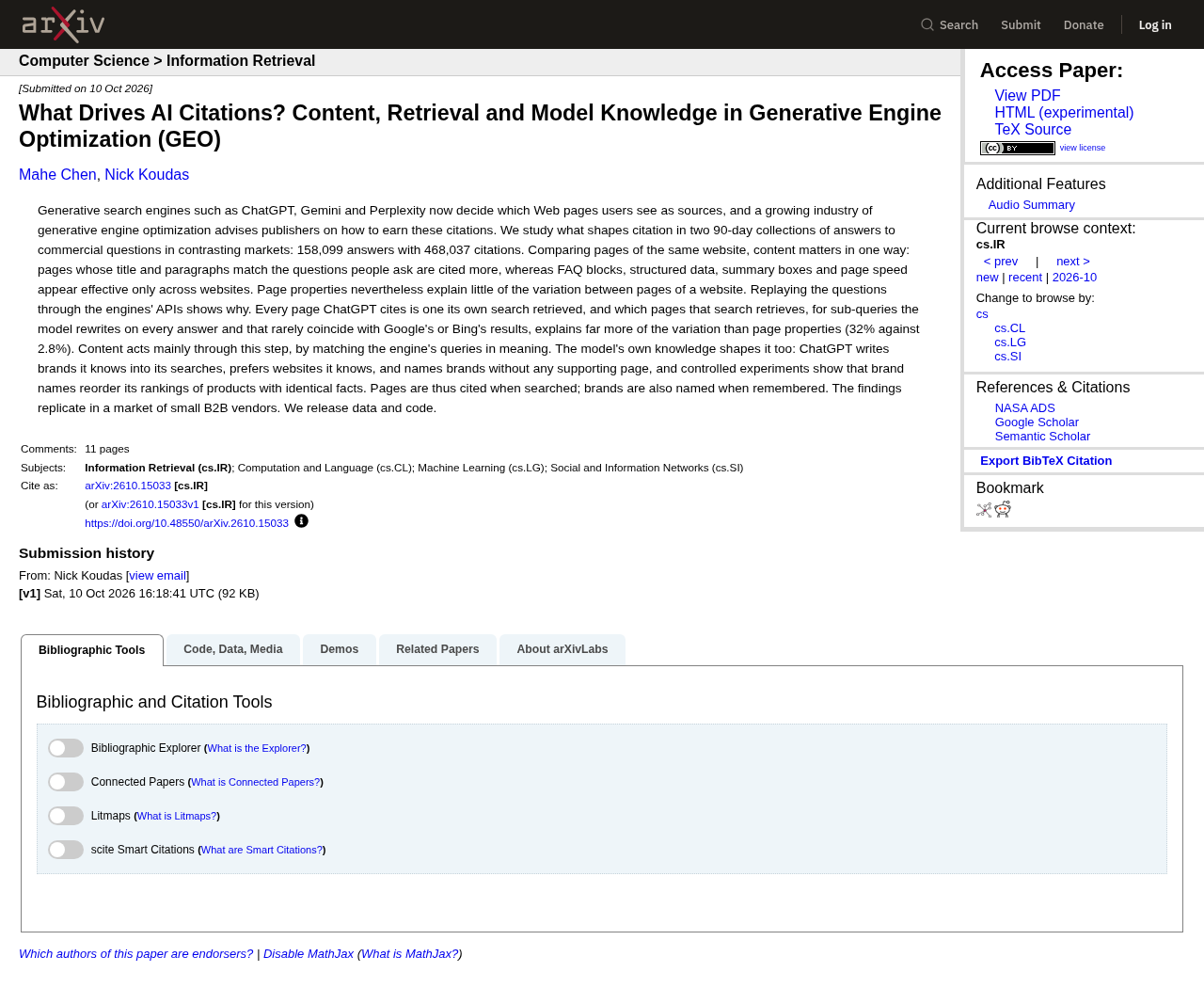
Two hedges matter here. The researchers measured links after the citations, so they say the direction isn't established. And links acted on which pages the engines retrieved, mostly for Gemini, but in the ChatGPT replay they had no effect on which retrieved pages got cited.
So treat links as a way in. They help a page get into the pool an engine searches, and what happens after that depends on the content and on what the model already knows.
What brand mentions do
Mentions work on two layers, and the evidence for each is different.
The first layer is memory. A model can only name brands it learned about in training, and what it learned comes along with the name. The study in the opening tested this. Xi Chu of Trine University and YuPeng Hou of Texas A&M ran GPT-4o-mini, Claude Sonnet 4.6 and a Gemini 3 Flash preview through their APIs, in English and Chinese, and the recognized name won every tie. The edge only held while nothing else differed. In a test that varied several factors at once, the authors attribute 82.4% of the variation in rankings to product details and just 1.2% to the brand. A smaller replication on USB-C cables and AA batteries showed the same pattern. The paper doesn't say when the trials ran. Its first version was posted June 16, 2026, and the latest revision on October 10, 2026.
Keep the scope of that study in mind. Every product was a consumer good, the facts were handed to the models in the prompt, and nothing was searched. It shows that a model leans on a familiar name when it has nothing else to go on. It doesn't show that mentions on the web make ChatGPT or Gemini recommend your software.
The Toronto team ran a related controlled test on the small models behind ChatGPT and Gemini, using questions from both its home internet and B2B software datasets. Brand names reordered rankings of products described with identical facts, and a name could push a brand down as well as up: a cable provider was ranked lower for fiber questions on the same facts. Their reading is that "what is imprinted matters, not only the name."
Both are controlled tests with constructed product lists and no live search, and only the Toronto one included software vendors. They still point the same way. In both, being known got a brand into the running and specific facts decided where it landed. On the live web, those facts have to sit on pages an engine can find, which brings in the second layer.
The second layer is retrieval. When an engine searches, the pages it finds can name you. The Toronto team's smaller B2B dataset (55 questions about proposal software for architecture, engineering and construction firms) showed how much that matters for little-known vendors. When a cited third-party page named a vendor, the odds that the answer also named that vendor were about 40 times higher for ChatGPT and about 18 times higher for Gemini. For the large consumer brands in the main dataset, the same lift was roughly 4 and 6 times. The authors sum it up: small vendors "depend on being found by search and on third-party pages that name them."
Google says something similar about its own AI features. Its guide to optimizing for generative AI search (updated July 10, 2026) notes that they "can show what's being said about products and services across the web, including in blogs, videos, and forum discussions."
Where the evidence is weak
Be skeptical of anyone who says the question is settled. The current research leaves these gaps:
No study I found runs a controlled test that adds links to one set of brands and mentions to another, then measures AI answers.
The cleanest brand evidence comes from controlled tests on consumer products. B2B software evidence rests on one 55-question dataset.
Popular "mentions beat links" correlations often come from vendors or agencies that sell one side of the trade. Ask who ran the study and what they sell.
Search interest, online conversation and links all rise together for brands that are growing. The research can't separate them cleanly, and the Toronto authors note the same tangle.
Engines differ. The link effect above was mostly Gemini, and an answer you care about may come from an engine that weights things differently.
What the evidence does support: being talked about, searched for and named on relevant pages goes with AI visibility, and links help pages get retrieved. Plan around that instead of betting on a single winner.
Mentions that count for B2B SaaS
These are the mentions that tend to sit on pages buyers read and engines retrieve. Several also come with a link, which is the best case.
Category roundups and comparisons. "Best X for Y" pages name several vendors at once, which is the kind of third-party page that lifted small vendors in the Toronto data. Earn a place with a fair product and good information, not a fee.
Review sites. Complete, current profiles with recent reviews give engines and buyers fresh, specific language about you.
Integration partners' docs and directories. A partner's page that explains how their product connects to yours is a relevant, named, usually linked mention. Keep it about the integration: Google's spam policies list partner pages made only for cross-linking as link spam.
Communities. Threads where practitioners discuss your category, with you taking part openly and under your own name.
Podcasts and webinars with published pages or transcripts. A spoken mention only helps if it ends up as text on a page. There's little direct evidence on these, so treat them as a brand play first.
Your own comparison pages. They don't count as third-party mentions, but they put your name next to competitors on a page that answers comparison prompts. Our comparison pages guide covers how to build them honestly.
How to split the budget, by stage
These splits are my starting points, not research findings. Adjust them once you've measured where you stand.
If you're early stage with little search demand, put most of your effort into mentions that come with links: partner pages, honest inclusion in category roundups, founder appearances that produce a written page. You need to be findable and named at the same time. Link building for its own sake comes last.
If you're growing and already rank for some category terms, keep a steady flow of relevant links to the pages that sell (pricing, comparisons, integrations) and put the rest into review profiles and third-party roundups. At this stage you have enough baseline to test whether new mentions show up in AI answers.
If you're an established brand, the models may already know you well. Focus on accuracy and on the specific prompts where you're missing. Links matter mostly to protect rankings for pages you already have.
How to tell whether it's working
You won't get a clean causal answer, but you can see direction.
Before any campaign, record a baseline: 20 to 30 buyer prompts across the engines you care about, noting whether you're named and which pages are cited.
Keep a log of every new mention and link, with the date, the page and whether it links.
Rerun the prompts monthly. When a third-party page starts appearing in citations, check whether it names you.
Watch Google Search Console for branded query growth. It's a rough sign that more people know your name, though no study cited here proves it moves AI answers.
Give it a quarter before judging. Models update on their own schedules, and one month proves little.
If the pages cited in answers for your category never mention you, start your outreach list there. That list will serve you better than any generic list of "high authority" sites.
Whatever your stage, measure before and after. Our guide to measuring AI search visibility sets up a prompt panel you can rerun each month.
Mistakes to avoid
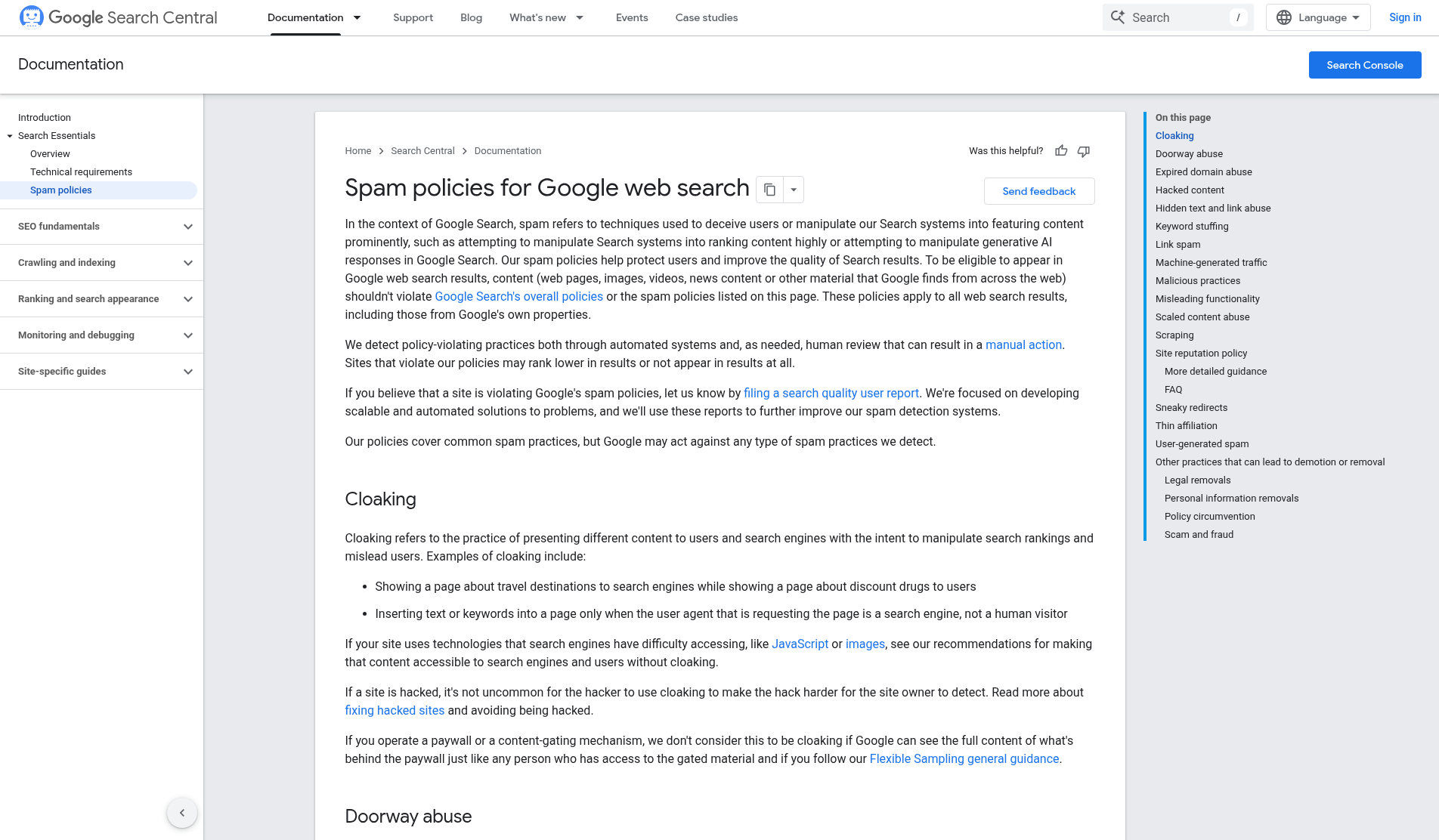
Buying links. Google's spam policies list "buying or selling links for ranking purposes" as link spam. The same list covers paid advertorials whose links pass ranking credit, and links with optimized anchor text in articles, guest posts or press releases distributed on other sites.
Buying "AI mentions." Paying for placements on low-quality list sites or seeding fake forum posts is the mention version of the same problem, and buyers spot it easily.
Chasing mention counts. One relevant roundup that buyers read beats fifty irrelevant ones.
Mass press releases. Syndicated copies rarely add a new, credible voice, and keyword-rich anchor links in them fall under the same link spam policy.
Treating this as SEO versus AEO. The same pages and relationships feed both. Our post on AEO vs SEO explains where they overlap.
My take
Backlinks aren't dead and mentions aren't magic. Links still help your pages get found, by Google and by the searches AI engines run. Mentions on relevant pages shape what models remember and what answers say, and they matter most when nobody has heard of you yet. Fund the overlap first: named, linked mentions on pages your buyers already trust. For the wider playbook, start with our guide to answer engine optimization, and for ChatGPT specifically, see how to get recommended by ChatGPT.