
Last updated: November 10, 2026
On October 28, 2026, the chief executive of the largest search engine told investors that AI was driving overall query growth, "including commercial queries," and that the year-over-year query growth rate was the highest in five years. In the same prepared remarks, he added that queries in the company's AI search mode are "on average three times longer than traditional searches." Those figures cover all of that engine's searches, with no breakdown for B2B or SaaS. Still, more commercial searching and longer queries favor SaaS teams that can tell which queries come from people ready to buy.
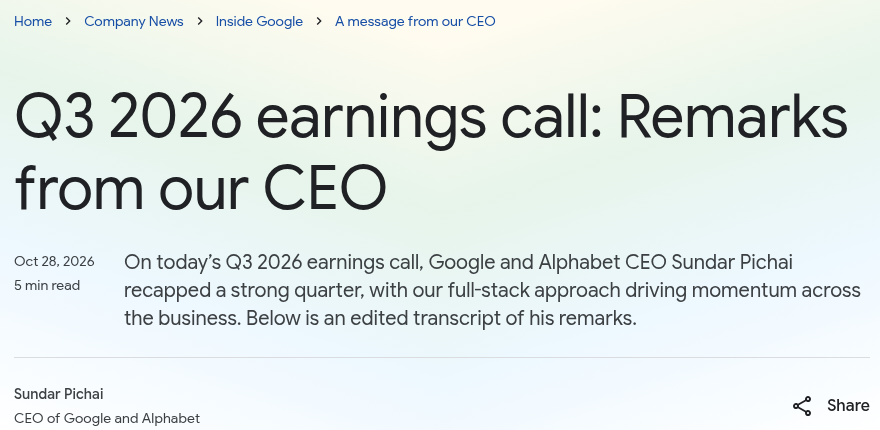
Alphabet Q3 2026 CEO remarks, Oct 28, 2026, captured Nov 3, 2026
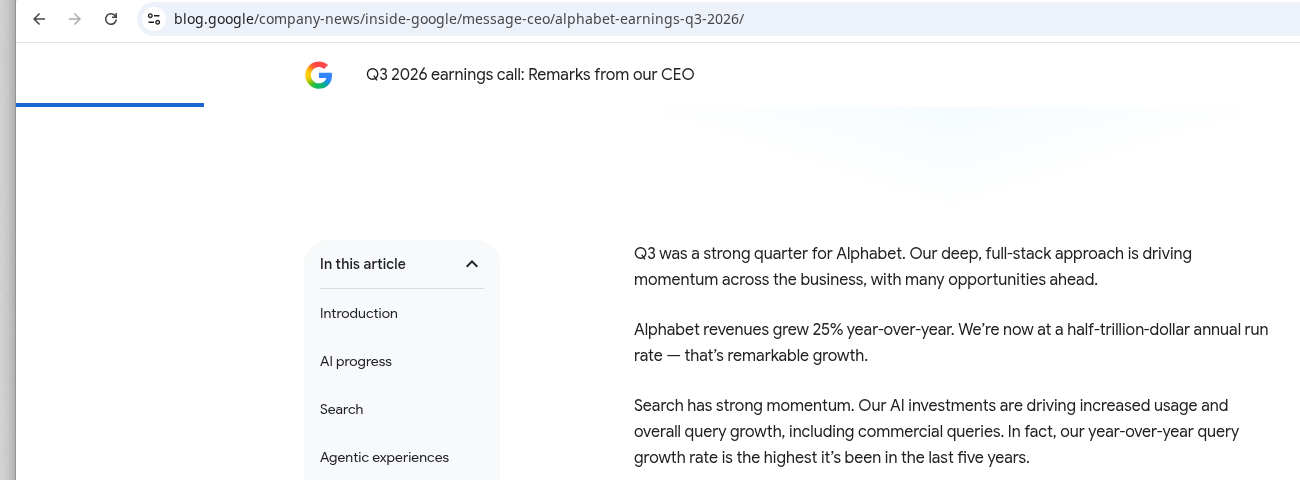
CEO remarks: query growth highest in five years, captured Nov 3, 2026
High intent keywords for SaaS are the queries typed by someone close to a decision or stuck on a problem your product solves. They fall into five patterns, most of them have low reported volume, and the best ones rarely show up in a keyword tool first.
What makes a keyword high intent
Intent is about what the searcher does next. A person searching "what is a sales cadence" wants a definition. A person searching "sales cadence tool that syncs with HubSpot" wants a product and has already named a requirement.
Five patterns cover most high intent keywords for SaaS:
Pattern | Example query shape | What the searcher wants |
|---|---|---|
Alternatives and comparisons | "[rival] alternatives," "[rival] vs [rival]" | To switch or to choose between named options |
Category with a qualifier | "[category] software for [segment or size]" | A shortlist that fits their situation |
Pricing and cost | "[category] pricing," "[rival] cost per user" | To check budget fit before talking to sales |
Integration | "[category] that integrates with [system]" | A tool that works with what they already run |
Pain point | "how to stop [problem]," "[task] taking too long" | Relief from a problem the product removes |
The first four are often called bottom-of-funnel keywords. The fifth gets less attention in most SaaS keyword plans.
Pain-point keywords and why they convert
A pain-point keyword describes the problem in the buyer's words, before they know a category of software exists for it. "Clients keep missing appointments" is a pain-point query for a scheduling tool. "Appointment reminder software" is the category query that the same person might type a week later.
Pain-point queries have three useful traits. Competition tends to be lower, because rivals mostly write for category terms. The searcher is motivated, because the problem is costing them time or money now. And the page that answers well gets to introduce the product as part of the fix, before any rival is in view.
The trait to watch is fit. A pain-point keyword only works when the product removes the pain directly. "How to write a better sales email" is a pain, but if the product is a dialer, the page will attract readers who never buy.
Where to find high intent keywords
Open the keyword tool last. Tools are good at volume for known terms and weak at the phrasing real buyers use. Start with sources that record buyers' own words.
Sales calls. Call recordings and notes hold the exact phrases prospects use to describe what's broken. Ask sales for the first two minutes of ten recent discovery calls and write down every problem statement.
Support tickets and onboarding chats. New customers describe the problem they bought the product to fix. Tag tickets from the first thirty days and look for repeated phrasing.
Review sites. Read the reviews of rival products, especially the three-star ones. "Switched because reporting was too limited" points to an alternatives query and a feature to lead with.
Communities. Forums and subreddits in the buyer's field hold long, specific questions that look a lot like AI search queries. The Reddit for AEO guide covers how to read and take part without spamming.
Search Console. Filter queries with a regex to surface the patterns above. For example, (alternative|vs|versus|pricing|cost|integrat|for small|for startups) catches most comparison, pricing, integration and qualifier queries you already get impressions for. A second filter for question words, ^(how|why|what|can|is) , finds the pain-point queries.
Paid search. If the company runs search ads, the search terms report holds the real queries that triggered them, with conversion data attached. That's the closest thing to measured intent most teams have.
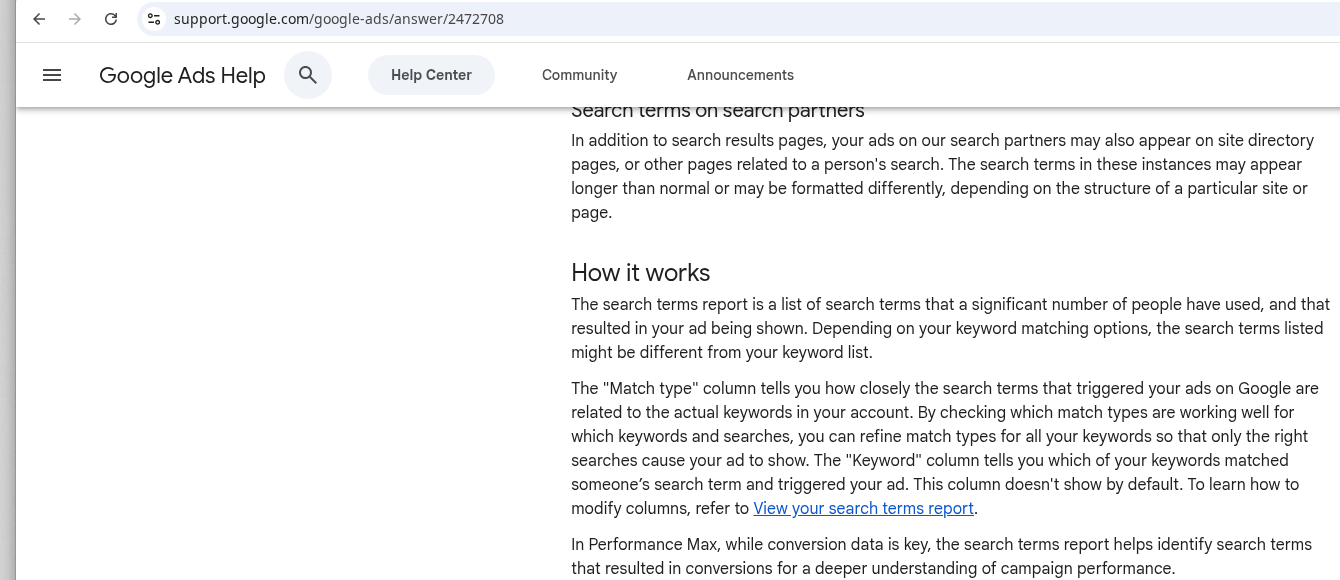
Google Ads search terms report help page, captured Nov 3, 2026
How to qualify a keyword before writing for it
Not every query that matches a pattern deserves a page. Score each candidate on four checks:
Product fit. Does the product solve this directly, without a stretch? Score 0 to 2.
Results page signal. Search the query. When vendor pages, review marketplaces and ads fill the first page, buyers are being sold to there. Definitions and news mean intent is earlier. Score 0 to 2.
Buyer language. Did the phrase or something close to it come from sales, support or reviews? Score 0 or 1.
Page available. Is there an existing page that should answer it, or does it need a new one? Note it. The answer sets the amount of work and leaves the score alone.
Anything scoring 4 or 5 goes into the plan. A 2 or 3 can wait. Zero to one is a reading query, however much volume it has.
Why low search volume is fine
Most high intent keywords show tiny volume in keyword tools, sometimes zero. That's expected. Tool volume comes from modeled data and often rounds small numbers down, and long, specific phrasing splits demand across dozens of variants that each look small.
Those variants also tend to share a page. One page about "[rival] alternatives for small teams" can rank for twenty variants that each show ten searches a month in a tool.
The longer AI Mode queries mentioned in that October earnings call leave room for these details. A longer query has space for the qualifiers (team size, industry, the system it has to connect to) that turn a broad category term into a high intent one.
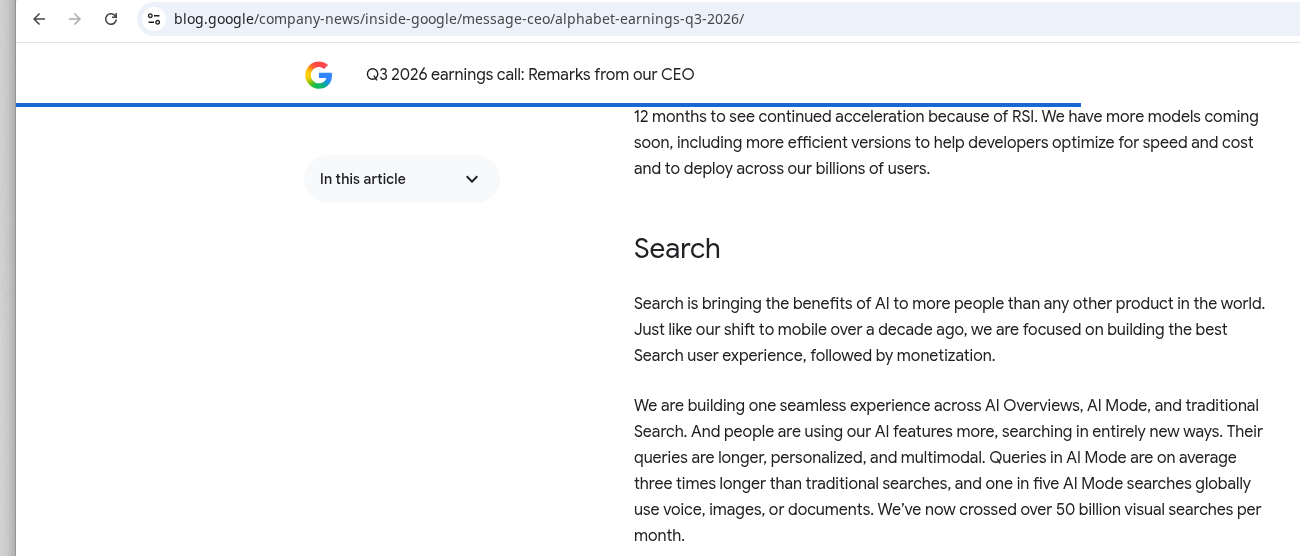
CEO remarks: AI Mode queries three times longer, captured Nov 3, 2026
A worked keyword sheet for a hypothetical scheduling tool
Take a hypothetical appointment scheduling SaaS for physical therapy clinics. It has a product page, a pricing page and a blog of general guides. The team pulls candidates from twenty sales calls, a month of support tickets, rival reviews and Search Console, then scores them.
Candidate query | Pattern | Found in | Score (fit + results + language) | Page type |
|---|---|---|---|---|
"physical therapy patients not showing up" | Pain point | Sales calls | 2 + 1 + 1 = 4 | Problem guide with the product as the fix |
"[rival] alternatives for PT clinics" | Alternatives | Rival reviews | 2 + 2 + 1 = 5 | Alternatives page |
"scheduling software for physical therapy" | Category with qualifier | Search Console | 2 + 2 + 0 = 4 | Segment landing page |
"PT scheduling software that works with [EHR]" | Integration | Support tickets | 2 + 2 + 1 = 5 | Integration page |
"how much does clinic scheduling software cost" | Pricing | Sales calls | 2 + 2 + 1 = 5 | Pricing page section, plus a cost guide |
"how to run a physical therapy clinic" | Broad informational | Keyword tool | 0 + 0 + 0 = 0 | None |
The highest-scoring rows need three page types the site doesn't have: an alternatives page, a segment page and an integration page. The last row is the kind of term a keyword tool shows with the biggest volume, and it scores zero because nobody searching it is shopping.
The scores are inputs in a hypothetical. A real team would add the revenue weight of each product area before final ranking.
Matching each keyword to the right page
The page type matters as much as the keyword. A pain-point query answered with a product page reads like an ad. A comparison query answered with a blog post loses to the rival's dedicated page.
Alternatives and comparison queries get dedicated pages with a fair, specific comparison. The comparison pages guide covers structure.
Pricing queries belong on the pricing page first. The case for showing prices publicly is laid out in should SaaS publish pricing.
Integration queries get one page per integration, built from a template when there are many. The programmatic SEO for SaaS guide covers when a template is safe.
Category-with-qualifier queries get segment or use-case landing pages.
Pain-point queries get problem guides that explain the fix in full, then show where the product handles it.
The same queries, phrased as questions, are what buyers ask assistants. Prompt research for AEO covers how to turn this keyword sheet into a prompt set.
What to watch out for
Volume as the filter. Sorting by volume pushes the plan toward broad reading queries. Sort by score, then use volume to break ties.
Pain points the product doesn't solve. Traffic from loosely related problems inflates the blog and dilutes conversion rates.
One page per variant. Twenty near-identical pages for twenty phrasings invite thin-content problems and split the ranking signal. One strong page covers the group.
Rival names in titles without a fair comparison. Alternatives pages that only praise your product lose trust fast, with buyers and with review-site moderators.
Skipping the results page check. A query can look commercial and still return only definitions. Search it before you brief it.
Ignoring the words sales hears. A list built only from tools sounds like every rival's list.
Teams that want help building and writing these pages can see how Miraa works as an SEO content agency.
FAQ
What are high intent keywords?
Queries from searchers close to a purchase decision or stuck on a problem a product solves. For SaaS, they're mostly alternatives, comparison, pricing, integration, qualified category and pain-point queries.
What is pain-point SEO?
Writing for the queries buyers type about a problem before they know which software category solves it, then showing how the product fixes it. It works when the product removes the pain directly.
How do you find high intent keywords without a paid tool?
Sales call notes, support tickets, rival reviews, community threads, Search Console regex filters and, if you run ads, the paid search terms report. All of these record buyers' own words.
Are zero-volume keywords worth targeting?
Often, yes. Tool volume rounds small numbers down and splits demand across variants. A page that answers a group of specific, buying-stage queries can still bring signups even when each variant shows little volume.
How many high intent keywords should a SaaS site target first?
Start with the twenty to thirty that score highest and map them to page types. Most early programs find that fewer pages than expected cover the list once variants are grouped.
Building your first high intent keyword list
Collect buyer language from sales, support and reviews, filter Search Console for the five patterns, score every candidate on fit, results page and language, and assign a page type to each one that scores 4 or more. Revisit the list each quarter, since rivals, integrations and buyer phrasing all change.