

Ahrefs found that 79.1% of the "best" lists ChatGPT cited as sources had been updated in 2025, so an old comparison page in your category is close to invisible. (Ahrefs) That matters more in sales tech than almost anywhere, because it's one of the hardest SaaS categories to rank in. Dozens of tools do outbound sequencing, data enrichment, dialing, conversation intelligence or AI SDR work. Most of them sell to marketers who know SEO.
Your buyers are also quick to compare. Someone who searches "[competitor] alternatives" or "[tool A] vs [tool B]" already has a budget and a shortlist. Those searches are fought over by every vendor, by review sites, and now by AI answers.
Our position: in sales tech, a team with ten honest, current comparison pages will out-earn a team with two hundred blog posts. Start at the bottom of the funnel and stay there until those pages rank. This playbook covers what makes sales-tech SEO different, a map of the queries worth fighting for, the pages each person on the buying committee needs, and the mistakes that are common in this category.
What makes sales-tech SEO different
Three things set this category apart from generic B2B SaaS SEO.
Buyers search by competitor name. In a crowded category, the highest-intent searches often contain someone else's brand: "Apollo alternatives," "Outreach vs Salesloft." That makes comparison and alternatives pages the core of the program, not an extra.
The buying committee is wide. A rep cares whether the tool saves time. RevOps cares about CRM sync and data hygiene. The sales leader cares about pipeline and cost per seat. Security and legal care about data sources and consent. One "product" page can't serve all four. Sales enablement, engagement, and revenue intelligence run into that same split.
Buyers lean on AI for shortlists. In March 2026, G2 put the question to 1,076 B2B software buyers. Of those, 51% now begin software research in an AI chatbot more often than in Google, and 69% said a chatbot's guidance changed which vendor they picked. (G2 via PR Newswire) G2 sells review data, so this is vendor research and should be read as interested, but the direction matches Gartner's: of 645 B2B buyers in its survey, 45% had turned to GenAI during a recent purchase, chiefly for vendor and product information. (Gartner)
So for sales tech, SEO and AEO are hard to separate. (If you want the full breakdown, see AEO vs SEO.)
The sales-tech query map
Not every search is worth the same. We'd group the queries for a sales automation product, from closest-to-purchase down.
Query type | Example | Who searches it | Page that should answer it | Priority |
|---|---|---|---|---|
Head-to-head | "[you] vs [competitor]" | Buyer with a two-vendor shortlist | Comparison page | Highest |
Alternatives | "[category leader] alternatives" | Buyer unhappy with an incumbent | Alternatives page | Highest |
Best-of category | "best AI SDR tools", "best cold email software" | Buyer building a shortlist | Category page or honest roundup | High |
Integration | "[tool] HubSpot integration" | RevOps checking fit | Integration page | High |
Pricing | "[tool] pricing", "[category] cost per seat" | Sales leader, finance | Pricing page with real detail | High |
Use case | "LinkedIn outreach automation for agencies" | Specific segment | Use-case page | Medium |
Problem | "how to improve cold email reply rates" | Rep or manager, early | Guide or blog post | Medium to low |
Definitions | "what is a sales cadence" | Students, new reps | Glossary or skip | Low |
Two notes on this table.
First, the format of the page should match the format of the question. Of the sources ChatGPT used across 750 top-of-funnel prompts in an Ahrefs study, 43.8% were "best X" blog lists. (Ahrefs) When the question is "best X", lists win. When it's "X vs Y", comparison pages are the natural answer.
Second, the bottom half of the table is where many sales-tech blogs spend most of their effort. Those posts can build reach, but they rarely start a sales conversation on their own.
Pages each buyer needs
The same idea from the other side: what each person on a typical sales-tech buying committee needs to find.
The rep: "Will this save me time?"
Reps want to see the product working. Give them short use-case pages built on real workflows: how a sequence gets built, what a rep does each morning, what the AI writes and what the rep still edits. Screenshots and short videos beat feature lists.
YouTube matters for AI visibility too. Ahrefs' 75,000-brand study found YouTube mentions had the strongest correlation with brand visibility in ChatGPT, AI Mode and AI Overviews (~0.737). (Ahrefs) That's a correlation, not a guarantee, but product demos on YouTube serve the rep either way.
RevOps: "Will this break my CRM?"
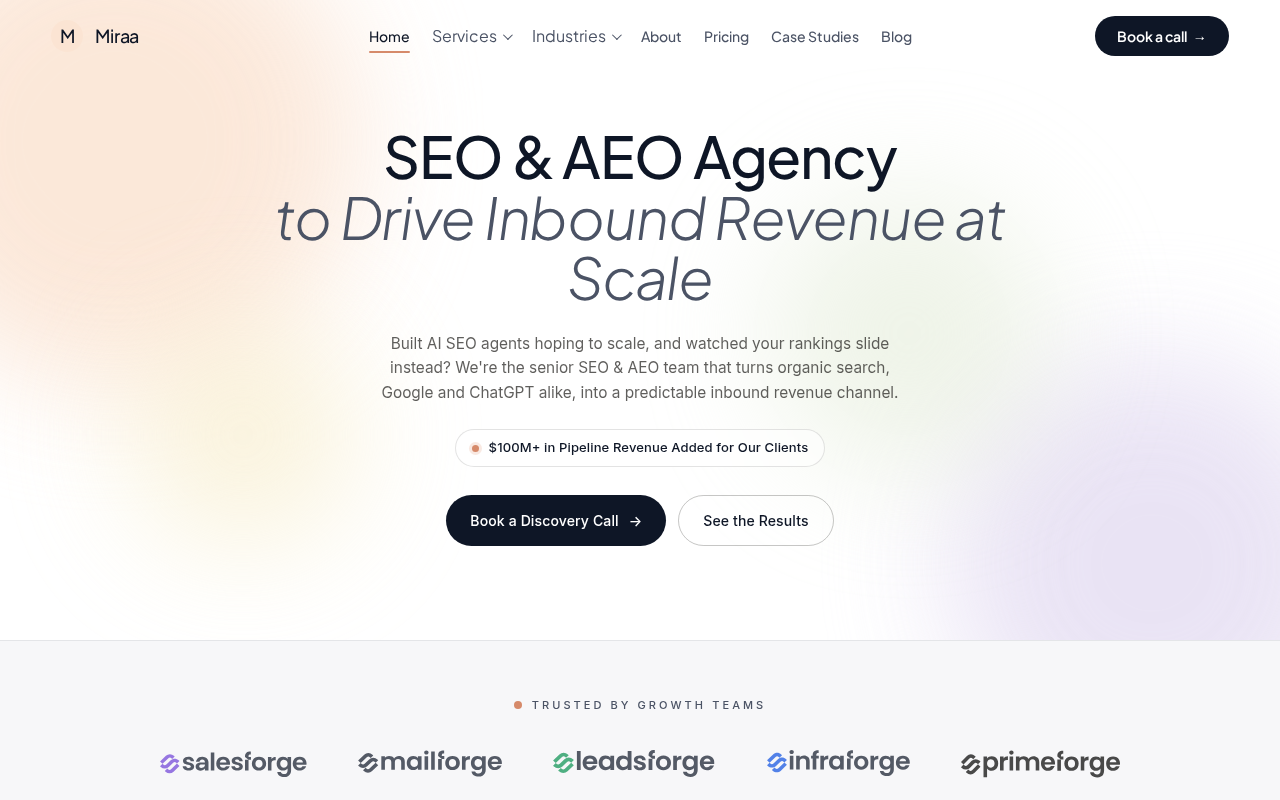
RevOps buyers search for integration detail: which objects sync, which direction, how duplicates are handled, what happens when a field is missing. Build one page per real integration, and only for integrations that exist. Miraa's fintech page makes the same point about product pages: they "have to match engineering." (Miraa)
The sales leader: "What will this do to pipeline, and what does it cost?"
Publish real pricing if you can, including seat minimums and what's in each tier. If you can't, explain what drives the price. A vague pricing page leaves the AI answer to guess, and the guess is often an old number from a third-party site.
Security and legal: "Where does this data come from?"
Data tools in particular get asked about data sources, consent and regional rules. A clear, dated page on data sourcing and compliance does more than a badge in the footer. Have legal review it before it goes live.
How to build comparison and alternatives pages in sales tech
Comparison pages are the core of sales-tech SEO, so they get their own section. (The full method is in the comparison, alternatives and category pages guide.)
Marketer Neil Patel summed up why on X in September 2026: lots of page types get pulled into AI answers, "but when someone is deciding what to buy, the comparison page is the one that sends them to you." (Neil Patel on X)
A few rules that matter more in sales tech than elsewhere:
Compare on what buyers check. Data coverage and accuracy claims, deliverability features, CRM sync, seat pricing, contract terms. Not a 40-row feature grid.
Say where the competitor wins. If the incumbent has better data coverage in a region, say so. Google's guidance for review content asks you to cover "benefits and drawbacks" and explain "which might be best for certain uses or circumstances." (Google Search Central)
Don't invent a competitor's weakness. Sales-tech buyers often run trials of both tools. A false claim gets caught on the first call.
Date the page and keep it current. Competitors change pricing often, and as the Ahrefs freshness figure at the top shows, recently updated lists are the ones ChatGPT tends to use.
A word on self-ranking lists. Vendor-published "best X" lists that put the vendor at #1 still appear among ChatGPT's sources, Ahrefs found. (Ahrefs) SEO consultant Lily Ray has mocked the pattern on X, joking about "objective, deeply researched" articles where the publisher "happened to come out on top." (Lily Ray on X) Our view: if you publish one, flag yourself clearly and hold your product to the same criteria as everyone else.
Content only a sales-tech company can publish
Sales tools sit on interesting data: reply rates, send volumes, meeting rates by channel. That can be your best content, or your biggest risk.
The upside. Google's AI optimization guide says content with "a unique point of view" and first-hand experience is what it wants, and that a summary of existing content "simply restates information already available elsewhere." (Google Search Central) Aggregated, anonymized benchmarks from your own product are exactly that kind of content.
The risk. Benchmarks need a real method: sample size, date range, how you counted. Publish the method with the numbers. If you can't share the method, don't publish the number. And check with legal and your customer agreements before you use customer data, even when it's aggregated.
Other ideas that need no invented data:
Teardown pages: how a real (consenting) customer set up their outbound motion.
Honest migration guides: moving from [competitor] to you, step by step, including what doesn't carry over.
Opinion pieces from named people on your team with real sales experience.
Common mistakes in sales-tech SEO
Publishing at scale with AI. It's tempting in a category with hundreds of keyword variations. Google says that building content for each query variation "primarily to manipulate rankings or generative AI responses" breaches its policy on scaled content abuse. (Google Search Central) Miraa's homepage makes the same argument from the client side: hundreds of agent-written posts can drag down a whole domain. (Miraa)
Buying links or mentions. Common in this category, and risky. Google lists seeking inauthentic mentions among the AI-search tactics that aren't as helpful as they seem.
Ranking for the wrong things. Traffic from "what is a sales cadence" looks good on a chart and rarely books a demo. Use Search Console's branded queries filter (rolled out to all eligible sites in March 2026) to separate brand demand from non-brand growth. (Google Search Central Blog)
Ignoring how AI describes you. Run your top 20 buyer prompts in ChatGPT, Perplexity and Gemini each month. If an answer has your pricing or integrations wrong, fix the source page first. The What is AEO? guide includes a starting checklist.
A 90-day starting order
Starting from scratch, we'd go in this order:
Weeks 1–2: fix indexing and rendering on the homepage, pricing, integration and existing comparison pages. Check the "Search generative AI" setting in Search Console. (Google Search Central)
Weeks 3–4: run your top 20 buyer prompts across ChatGPT, Perplexity, Gemini and Google. Note who gets named and which pages get cited.
Month 2: publish or rebuild comparison pages for your three most-compared competitors, plus one alternatives page for the category leader.
Month 2–3: build integration pages for your top CRM and data integrations, and a real pricing page.
Month 3: prune or merge thin blog posts that compete with those pages. Then re-run the prompt set.
That's deliberately slow. A handful of accurate pages close to the purchase usually beats a hundred posts about sales tips.
Measuring sales-tech SEO
Sales-tech teams already think in pipeline, so hold SEO to the same standard. Track demos and pipeline sourced from organic and AI search, not sessions. Add AI tools to your "How did you hear about us?" dropdown. The B2B SEO pipeline attribution guide walks through the setup.
Where sales-tech teams should start
Sales-tech SEO is mostly a comparison game, played in front of a skeptical, fast-moving buyer who probably asked ChatGPT first. The teams that do well publish fewer, more honest pages, close to the purchase, and keep them current.
What we'd do first: list the five tools you lose deals to, ship a fair "vs" page and an alternatives page for each, set a refresh date on every one, and only then think about top-of-funnel content. If you run several products, split the keyword map so they don't compete with each other.
If you'd rather hire help, the roundup of sales automation SEO agencies judges agencies on whether they've won "vs" searches for named sales-tech clients.
Miraa's case studies page now includes a named sales-tech example: five sibling cold-outreach products (Salesforge, Mailforge, Warmforge, Primeforge and Infraforge) given separate intent territories and a bottom-funnel engine of competitor reviews, alternatives pages and pricing comparisons. Per the study, average Google position across the five domains moved from 23.5 to 9.4 between Apr–Jun 2025 and May–Jul 2026. A second, anonymized study covers a LinkedIn automation tool. For cold-outreach products, Miraa's cold email SEO page, and its B2B SaaS SEO page explains the broader approach.