
In a March 2026 survey of 1,076 B2B software buyers, G2 found that 51% now start software research in an AI chatbot more often than in Google, up from 29% in April 2025. (G2 via PR Newswire) If you sell an AI product, that means your buyers are using AI to find AI, and that odd loop sits at the center of SEO for AI companies.
AI companies also have problems most SaaS companies don't. Your category may not have a settled name yet. Your product changes monthly. And a model asked "what does [your product] do?" may confidently describe last quarter's version, or a competitor's.
Here's the position this guide takes: an AI company's first SEO problem is almost never traffic. It's description. If a model can't say what you do, for whom, and what you don't do, more content just gives it more to get wrong. So the seven moves below start with the description and only then go after rankings and mentions. Each names the problem, what the evidence says, and what to do.
The seven moves
New to answer engine optimization? Read What is AEO? first, then come back.
Why AI search matters more for AI companies
G2 sells software reviews, so the survey quoted at the top is vendor research and deserves a little skepticism. Still, for an agentic AI startup, the buyers you want skew even further toward early adopters than that sample.
1. Pick a category name and stick to it
AI categories get renamed constantly: "AI agent", "agentic workflow platform", "AI teammate", "autonomous SDR". If your homepage says one thing, your pricing page another, and your G2 profile a third, a model has to guess which bucket you belong in.
Google describes its AI features as using query fan-out: the model splits a question into related sub-searches and pulls results from each. (Google Search Central) If your pages don't use the words buyers use for the category, you don't show up for the sub-search that decides the shortlist.
Ahrefs' study of 75,000 brands found that branded web mentions correlated strongly with AI visibility (0.66–0.71), and that the three AI assistants it studied largely mention the same brands (output overlap correlation of 0.779). (Ahrefs) Consistency across the web shapes how you get described, not just how you describe yourself.
What to do:
Choose the category term buyers already search and ask for. Check keyword tools and your sales call notes, then run a few prompts in ChatGPT and Perplexity.
Write one canonical description: what the product is, who it's for, what it replaces. Reuse it on the homepage, About page, docs intro, G2, Crunchbase and LinkedIn.
If you're creating a new category, pair the new term with the old one ("an AI SDR, or autonomous outbound agent") until the new one sticks.
a model can't be more consistent about you than you are.
2. Treat your docs as marketing pages
AI companies often have better docs than marketing pages. But docs live on a subdomain, behind JavaScript, or out of the main navigation, so they don't help commercial searches.
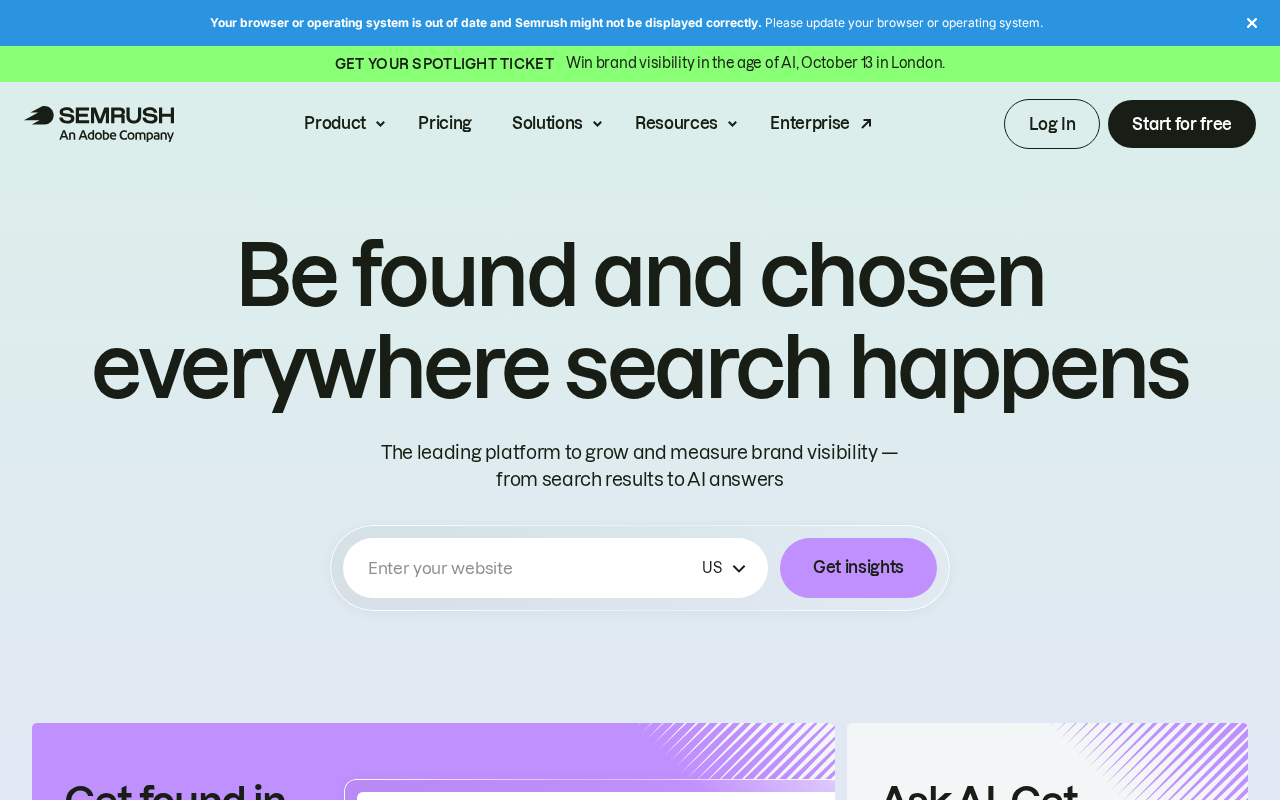
Docs get cited more than you might expect. When Semrush and Kevin Indig compared ChatGPT's minimal and high reasoning modes on the same 100 prompts, official documentation and support pages rose from 12.4% to 17.5% of citations in high-reasoning mode. (Semrush) In Ahrefs' study of "best" lists, documentation showed up in 7.6% of software prompts where ChatGPT cited the recommended brand's own pages. (Ahrefs)
Technical buyers check docs to see if a demo is real. Models do something similar.
What to do:
Make sure docs are crawlable and indexed. Google's bar for its AI features is the same as for Search: indexed and eligible for a snippet. (Google Search Central)
Check that the main content renders without client-side JavaScript failing. Google can process JavaScript, but says JS sites are "generally more complex" for SEO. (Google Search Central)
Add a plain-English summary to the top of key docs pages: what this feature does, which plan it's on, what it doesn't do.
Link from marketing pages to the docs that prove the claim ("See how the Salesforce connector handles custom objects").
3. Write the "what it can't do" page
AI products have real limits: supported models, data residency, rate limits, which actions need human approval. When those limits aren't written down, an answer engine fills the gap. It usually fills it generously.
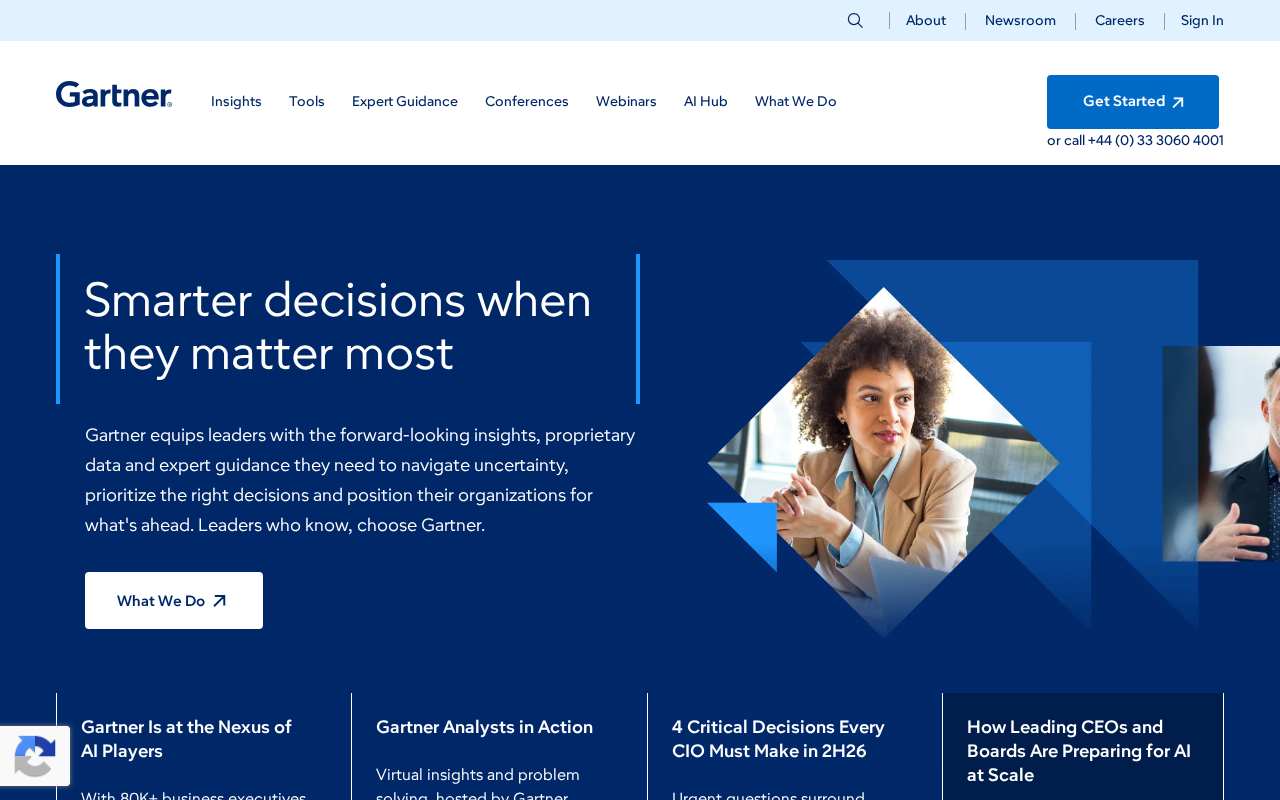
Gartner surveyed 645 B2B buyers in August–September 2025. 45% had used GenAI in a recent purchase, mostly to gather vendor and product information, and 51% said they were more likely to get misleading information from GenAI. 69% preferred to validate AI-generated insights with a sales rep. (Gartner)
So buyers arrive with an AI-written picture of you and check it on a sales call. If the picture is wrong, your rep spends the call correcting it.
What to do:
Publish limits next to capabilities. If autonomous actions only run on the Enterprise plan, say so in the same sentence as the feature.
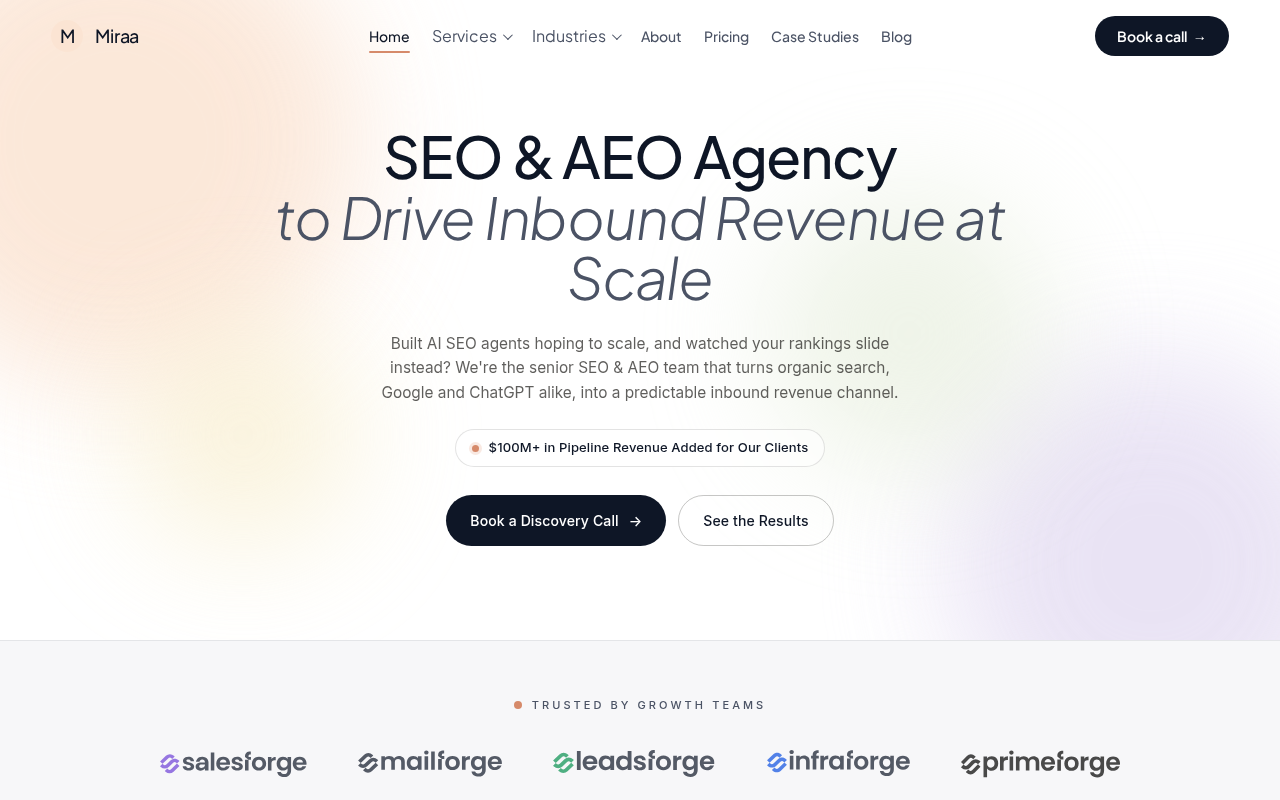
Write a "who this isn't for" section. Miraa's AEO page makes this argument: fit, including the negative, is one of the few sentences a buyer will repeat internally. (Miraa)
Keep a dated changelog. AI products change fast, and a dated page tells readers (and crawlers) what's current.
4. Own your comparison and alternatives pages
For AI tools, "X vs Y" and "X alternatives" queries arrive early, because buyers know the category is crowded. If you don't publish the comparison, someone else does, often a competitor.
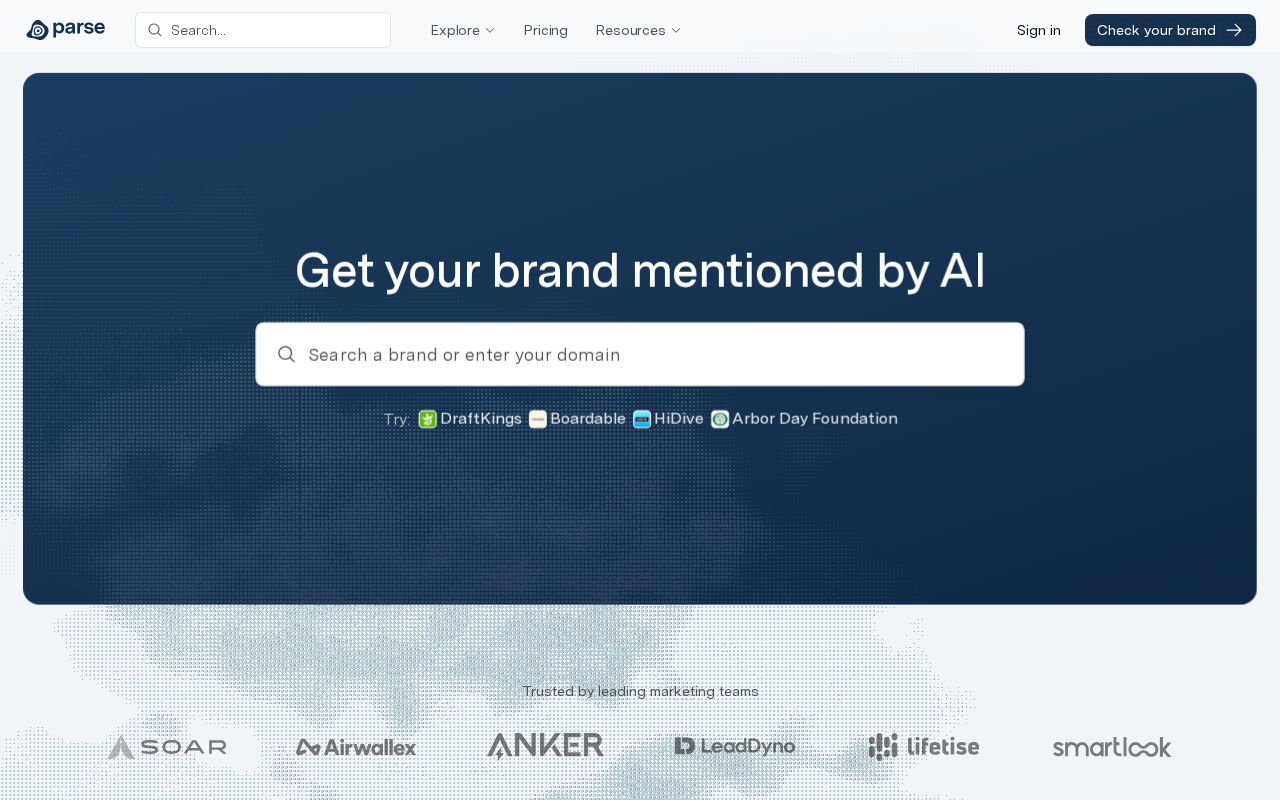
Across 750 top-of-funnel prompts, Ahrefs found "Best X" blog lists were 43.8% of the source pages ChatGPT drew on. (Ahrefs) Comparison content overall is a smaller share: Parse, which sells AI-visibility tracking, found in its own vendor research that pages with comparison terms in the URL made up 4.7% of 7.4 million cited links from ChatGPT Search and Google AI Mode between May and August 2026. (Parse) Read together, these say comparison pages win when the question is comparative, not everywhere.
What to do:
Build "[you] vs [competitor]" pages for the 3–5 rivals buyers actually compare you with, and one alternatives page for the category leader.
Be fair. State where the competitor is the better pick. Pages that only praise you are easy to discount, for people and models alike.
Use the guide to comparison, alternatives and category pages for page templates and honesty rules.
5. Earn mentions where models look
A new AI company has few backlinks and little brand search. Classic SEO authority takes years.
Ahrefs found ChatGPT's brand visibility correlated only weakly with Domain Rating (0.266) and branded search volume (0.352), while YouTube mentions had the strongest correlation of any factor (~0.737). (Ahrefs) These are correlations, not proof of cause. But they suggest off-site presence may matter more than domain age.
Each engine has its own sources, too. Semrush's 2026 AI Visibility Index found ChatGPT cites about 15 sources per response and Gemini about 3; ChatGPT leaned often on Reddit and Wikipedia. (Semrush)
What to do:
Publish product walkthroughs on YouTube. Real demos, not ads.
Get listed and reviewed on the sites your buyers use (G2, Product Hunt, relevant directories and newsletters).
Show up in genuine community threads where your category is discussed, as a named employee.
Don't buy placements. Google warns that seeking inauthentic mentions isn't as helpful as it seems. (Google Search Central)
Want a team to run this for you? The roundup of AEO agencies for agentic AI companies compares them on how they track AI citations.
6. Make your site usable by agents, not just crawlers
Agents increasingly visit sites to complete tasks: compare specs, check pricing, start a trial. If your own site breaks for agents, that's an awkward look for an agentic AI company.
Google's optimization guide says browser agents may analyze screenshots, inspect the DOM and read the accessibility tree. (Google Search Central) Google's web.dev guide to agent-friendly sites recommends semantic HTML (real buttons and links), stable layouts, labeled form inputs, and no transparent overlays hiding interactive elements. (web.dev)
SEO consultant Marie Haynes has described this shift on X as a move toward an "agentic web", saying Google has outlined new AI protocols including MCP, A2A and UCP, and that WebMCP will let agents use a site's functionality. (Marie Haynes on X)
What to do:
Run an accessibility audit on your pricing, signup and demo-request pages. Accessibility fixes and agent fixes overlap almost completely.
Keep pricing in HTML text, not only in images or interactive calculators.
Treat newer protocols like WebMCP as experiments. Google's own guide frames agentic work as something to explore "if this is something that's relevant to your business and you have extra time."
For crawl, render and index work, see Miraa's technical SEO page.
7. Don't scale your way into a penalty
AI companies can generate 1,000 pages overnight. Many do.
Google's optimization guide says that creating separate content for every variation of a query, including fan-out queries, "primarily to manipulate rankings or generative AI responses" violates its scaled content abuse policy. (Google Search Central) On October 1, 2026, Google added that it is "critical to manually factcheck and review all AI-generated content for accuracy and trustworthiness before publishing", including titles, meta descriptions, structured data and alt text. (Google Search Central)
Lily Ray, an SEO consultant, posted in September 2026 that she was preparing a talk on AI content case studies that succeeded at first and tanked months later, and that many of those case studies had claimed "unique content", E-E-A-T and proprietary data. (Lily Ray on X)
What to do:
Use AI for research, briefs and drafts. Have a person who knows the product approve every page.
Publish fewer pages, each with something only you can say: real benchmarks, real customer setups, real limits.
If you've already scaled, audit and prune before you add more.
How these moves fit together
The table maps each move to the surfaces it helps most.
Move | Google Search | AI answers (ChatGPT, Perplexity, Gemini, AI Overviews) | Agents |
|---|---|---|---|
1. Consistent category name | Ranks for the right head terms | Gets you into the right shortlist | Helps agents match you to the task |
2. Docs as marketing pages | Long-tail technical queries | Cited as primary sources | Specs agents can read |
3. "What it can't do" page | Qualifies traffic | Fewer wrong descriptions | Fewer failed tasks |
4. Comparison pages | "vs" and "alternatives" queries | Comparative prompts | Spec comparisons |
5. Off-site mentions | Links and brand search | Strongest correlation with visibility | Indirect |
6. Agent-usable site | Accessibility and UX | Indirect | Direct |
7. No scaled content | Avoids spam actions | Same spam systems apply | Indirect |
If you're weighing how much of this is "SEO" and how much is "AEO", the AEO vs SEO comparison covers the split.
Measuring it
Track a fixed set of 20–50 buyer prompts across the engines your buyers use. Log whether you're mentioned, cited, and described accurately. Use Search Console's Generative AI performance report for Google's AI features. (Google Search Central Blog) And ask "How did you hear about us?" on signup.
Ahrefs did exactly that last step: Claude and ChatGPT together account for 21.7% of its signups across free and paid tools, more than YouTube and second only to Google. (Ahrefs) That's one company, but it shows what self-reported data can surface. The guide to B2B SEO pipeline attribution goes deeper.
Putting the seven moves in order
AI companies have an advantage in AI search: their buyers are already there. The disadvantage is speed. Your product, your category name and your competitors all change faster than the web's description of you.
Don't run these moves in parallel. Fix the description first (moves 1–3), then fight for the comparisons (move 4), then build reputation off-site (move 5). Agent-readiness and restraint (moves 6–7) run in the background the whole time. If you only have budget for one quarter of work, spend it on moves 1 to 3; they make everything after them cheaper.
Miraa is an SEO and AEO practice for B2B SaaS and AI companies. It doesn't claim any access to model training data or paid placement inside a chatbot; the work is making a public site something a model can explain without guessing, which its LLM SEO page describes.