
Last updated: October 23, 2026
Perplexity's sources don't stay put. University researchers tracked its answers daily to 651 questions about the US home internet market from June 24 to September 21, 2026, through its API. Only 22% of its pattern of cited sources still held two weeks later. After ten weeks, none of it did.
My verdict: that churn is good news for a SaaS company without a famous domain, because no one owns the citation slots for long. Let Perplexity's crawler in, write pages whose titles and paragraphs answer the exact questions buyers ask, and earn mentions on the sites that cover your category. Then check your prompts on a schedule, because a win this month guarantees nothing next month.
How Perplexity picks sources
Perplexity searches the web when someone asks a question, then writes an answer with links to the pages it used. Two things follow from that.
First, access matters more than history. If Perplexity's crawler can't reach a page, that page is far less likely to be a source, however good it is. The next section covers how to check.
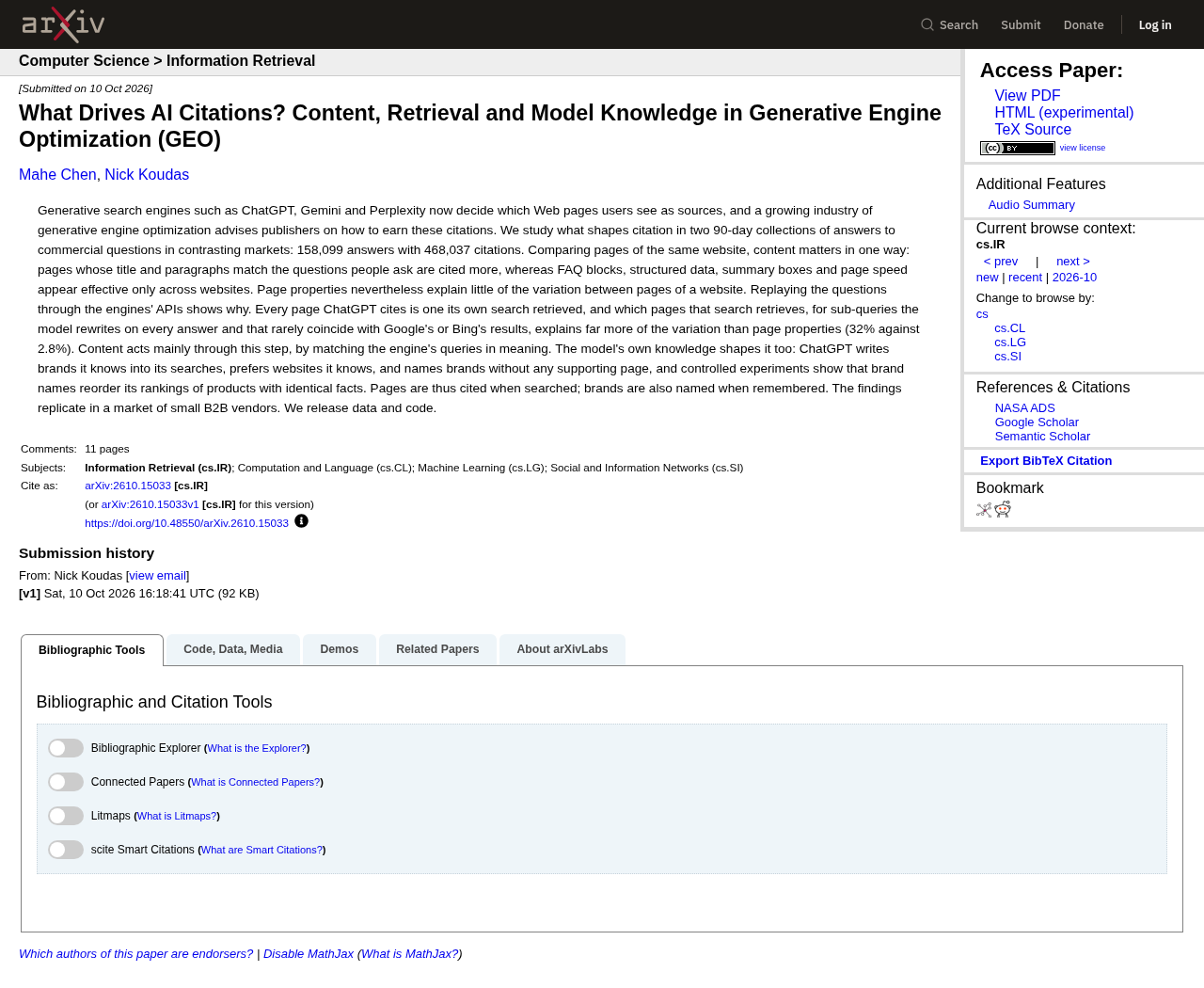
Second, getting retrieved matters more than anything you add to the page. The study behind the opening figure, by two University of Toronto researchers and published October 10, 2026, collected answers from three engines' APIs and compared pages within the same website, so domain strength was held constant. Its findings for Perplexity come later in this guide.
One caveat applies throughout. The researchers measured Perplexity's Sonar API, not the consumer app, and say the APIs "need not behave like their consumer applications." In their data, Sonar returned no citation at all in 95.8% of answers, which is nothing like what you see in the app. Use the research for direction and the app for your own checks.
Make sure PerplexityBot can reach you
This is the cheapest fix in the guide, and an easy one to break by accident.
Perplexity runs two agents, and they behave differently:
Agent | What it does | Does it follow robots.txt? |
|---|---|---|
PerplexityBot | Crawls pages so they can appear and be linked in Perplexity results | Yes. Perplexity recommends allowing it |
Perplexity-User | Fetches a page when a user's question needs it | Generally no (more below) |
Run through these checks:
Open your robots.txt and confirm nothing disallows PerplexityBot, including a blanket rule aimed at "all AI bots."
Check your firewall or bot protection. Perplexity's guide recommends an allow rule that combines the user-agent string with its published IP ranges (PerplexityBot, Perplexity-User), with setup steps for Cloudflare and AWS.
Give changes time. Perplexity says robots.txt updates can take up to 24 hours to take effect.
Look at your server logs for requests from those agents, and for 403 responses to them.
Don't mix this up with blocking AI training. Perplexity's crawler documentation describes PerplexityBot as "designed to surface and link websites in search results on Perplexity" and says it "is not used to crawl content for AI foundation models." It says Perplexity-User is "not used for web crawling or to collect content for training AI foundation models." Because PerplexityBot isn't a training crawler, blocking the crawlers that do gather training data is a separate choice from blocking PerplexityBot. For citations, PerplexityBot is the one that matters. The same page says: "To ensure your site appears in search results, we recommend allowing PerplexityBot in your site's robots.txt file." Perplexity doesn't spell out what happens if you disallow it, but going against its own advice is the likeliest way to lose citations.
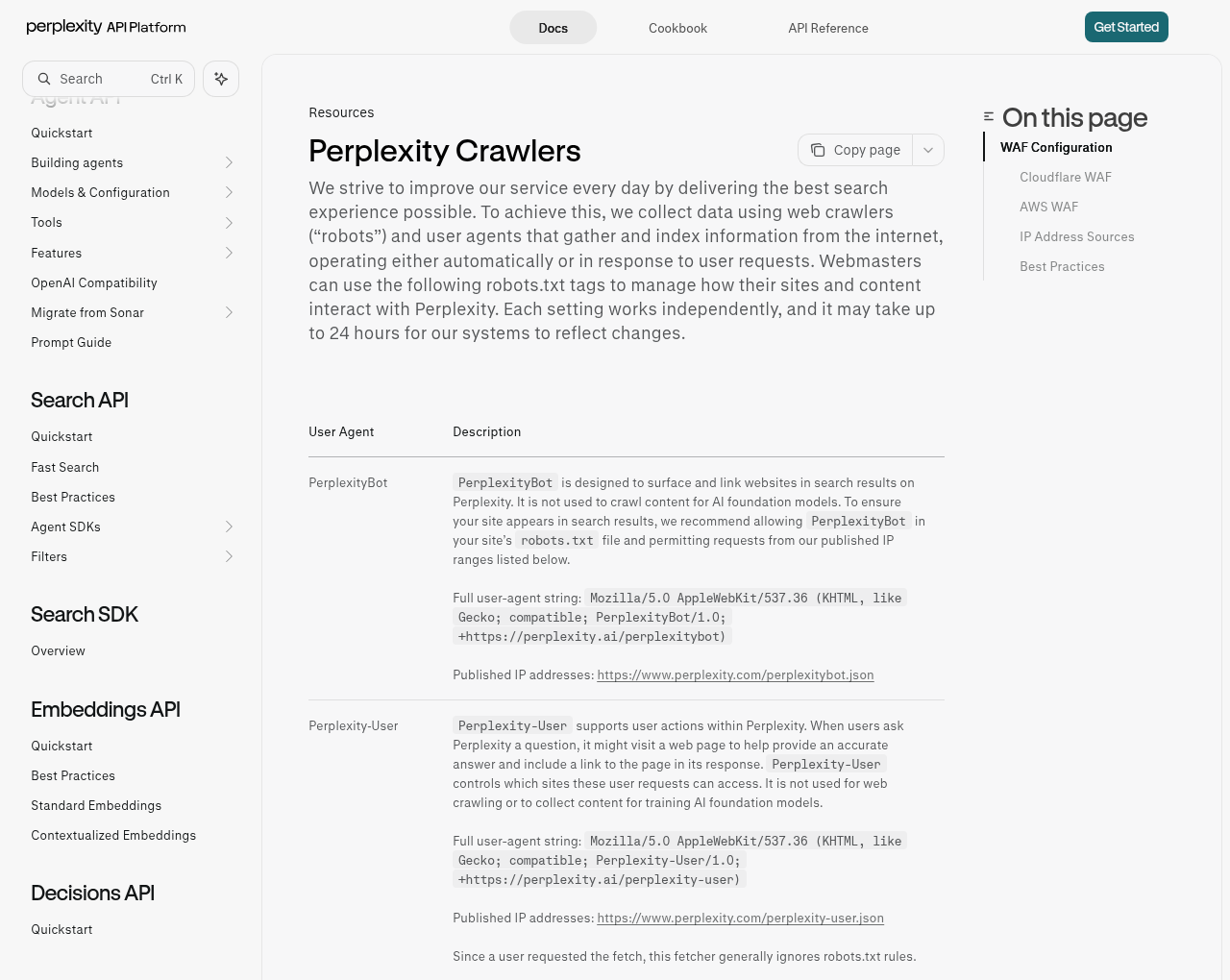
Perplexity-User works differently. The docs say that "since a user requested the fetch, this fetcher generally ignores robots.txt rules." If you actually want to keep Perplexity out of part of your site, robots.txt alone won't do it. You'd need a firewall rule, and you should expect fewer citations for those pages as a result.
Two lower-priority items. Make sure pricing, specs and integration lists appear in the HTML rather than only after scripts run. And if you're weighing an llms.txt file, read our llms.txt guide first: Perplexity's crawler guide asks for robots.txt and IP allow rules, not an llms.txt file.
Write pages Perplexity can quote
The Toronto study is the best current evidence on what helps a page get cited once Perplexity can reach it. Comparing pages within the same website, so domain strength is held constant, three features went with more Perplexity citations (main dataset, per standard deviation):
How well the best paragraph matched the query: 4.8% more citations
How closely the title matched the query: 4.6% more
Word overlap with the query: 7.1% more
Two popular tactics didn't register for Perplexity at all. Pages with an FAQ block got 2.7% fewer Perplexity citations and pages with schema.org markup 0.5% fewer, and neither difference was statistically meaningful.
In practice, that means writing for the exact question. A page titled "Best invoicing software for agencies" that opens with a direct answer beats a page titled "Why we built our product" that gets there in paragraph six.
For software prompts, these page types match how buyers phrase questions:
Comparison and alternatives pages, written fairly enough to be quoted. Our comparison pages guide covers the structure.
A pricing page with plain numbers, plan limits and what's included, in text.
Spec and integration pages that list what connects to what, one fact per line.
Category explainers that answer "what is the best X for Y" honestly, including when the answer isn't you.
Don't expect the page type itself to do the work. Pooling all three engines, the same study found that comparison, how-to, pricing, product and support pages were cited no more often than ordinary articles on the same site. What mattered was whether the page answered the question. Across all three engines, the best-matching paragraph also didn't need to sit at the top: its median position was 45% of the way down the page, because the engines found it wherever it was.
Skip the AI visibility busywork
A lot of advice on ranking in Perplexity is a checklist of page add-ons. The FAQ and schema numbers above already answer that for Perplexity itself. Summary boxes, author boxes and faster page speed showed no lift either when the researchers replayed ChatGPT's retrieval and compared pages at equal rank. Gemini's replay gave no ranking, and Perplexity couldn't be replayed at all.
The same ChatGPT replay showed that at equal rank, "concise pages from the original source win over roundups and forums." For a SaaS company, the original source on your pricing, integrations and limits is you. Write those pages plainly and keep them current.
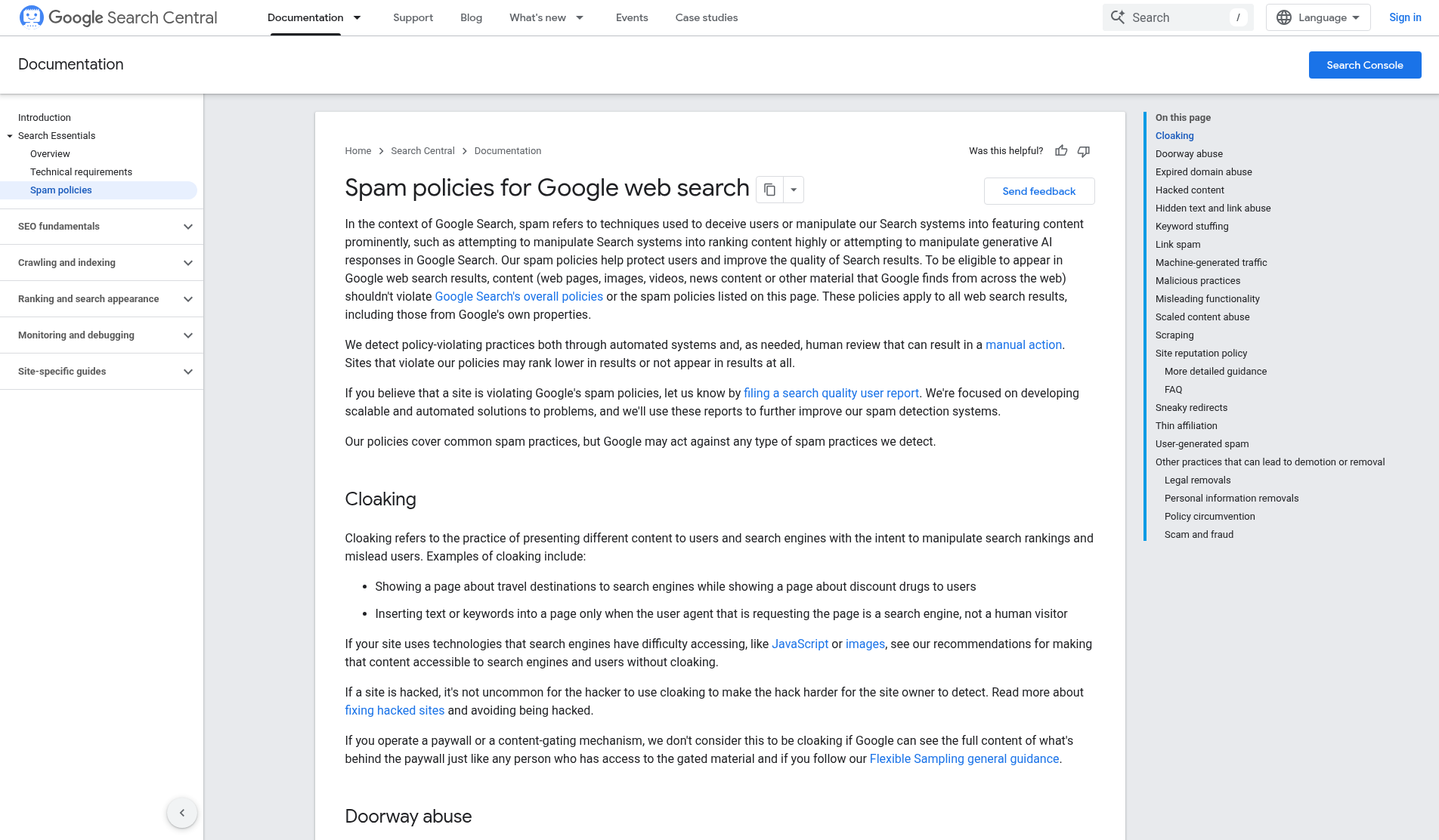
The opposite temptation is volume: generating hundreds of near-identical "best X for Y" pages in the hope that one gets retrieved. Google's spam policies now say outright that spam includes "attempting to manipulate generative AI responses in Google Search," and define scaled content abuse as generating many pages "for the primary purpose of manipulating search rankings and not helping users." A trick aimed at Perplexity still lives on a site Google ranks.
The third-party sources Perplexity leans on for software
Your own pages are only part of the picture. Perplexity also reads what others publish about your category, and the Toronto data gives two useful pointers.
First, pages that name more of the brands in a market got more citations: 11.8% more per standard deviation within a website, pooled across the three engines, mostly because they were cited for a wider range of questions. A fair comparison or roundup that names your competitors alongside you is exactly that kind of page, whether it lives on your site or someone else's.
Second, forum pages got 78% more citations than articles on the same site, and list pages 13% more (also pooled). Community threads and curated lists in your niche are worth showing up in, honestly and under your own name. One caution on both figures: ChatGPT and Gemini cited far more pages than Perplexity's API did, so pooled results lean on them.
How much big-name authority helps depends on your market. Pooled across the three engines in the study's consumer dataset one standard deviation of website authority went with 12.1% more citations. In its small business-software dataset, the effect was flat (minus 1.3%).
What to do with that:
Keep your G2 and Capterra profiles complete and current, with recent reviews.
Take part in the Reddit threads where your category is discussed, as yourself and with disclosure.
Get listed in integration directories that matter to your buyers, such as Zapier's app pages.
Publish on LinkedIn under real names, because those posts get cited too.
Pitch the niche publications that cover your vertical, since in smaller markets their reach matters more than their domain authority.
Test Perplexity prompts and log what you see
Perplexity is one of the easier engines to audit because every answer shows its sources. Set up a simple log.
Write 20 to 30 prompts in your buyers' words: category questions, comparisons, "alternatives to X," and problem statements.
Run each in the Perplexity app and record the date, whether you were named, which of your URLs was cited, and which third-party pages were cited.
Repeat every two weeks. With sources turning over as fast as the opening figure suggests, a quarterly check tells you almost nothing.
Check the links themselves. When an answer names you, confirm the citation points to a current, canonical page on your domain rather than a retired URL, a redirect chain or an outdated press release. If it's an old page, fix that page first.
Compare trends across runs, not single answers. Our guide to measuring AI search visibility covers how to score a panel like this, and our roundup of AI visibility tracking tools helps once the spreadsheet gets unwieldy.
What to prioritize, by situation
Start with the move that fits where you are.
If you're in a crowded category (CRM, project management, help desk), big brands already have authority you can't match quickly. Put more effort into third-party coverage, community threads and a few strong comparison pages that name the whole field.
If you're in a niche B2B market, domain authority mattered little in the Toronto data (pooled across engines). Build pages that answer the specific questions your buyers ask, with titles that use their wording.
If your product is new and has no reviews yet, focus on category explainers and integration pages you control. Ask your first customers for reviews early.
If security tooling sits in front of your site, fix access before anything else. Little in this guide helps while Perplexity gets a 403.
If you already show up well in ChatGPT, don't assume that carries over. The engines reward different things. Keep the work separate, and use our ChatGPT playbook for the ChatGPT side.
What to watch out for
Trusting API studies as app behavior. They point in a direction. Verify in the app.
Treating one good run as a win. Log trends across several runs.
Using robots.txt as your only control over Perplexity. It governs the crawler, not the fetches users trigger.
Mass-producing near-identical "best X" pages. Google's spam policies treat that as scaled content abuse.
Writing only for Perplexity. Two of its significant signals in the Toronto data, a matching best paragraph (4.8% more citations) and a matching title (4.6% more), are ordinary relevance work rather than a Perplexity trick, so start there.
Start with access, then measure
Perplexity is the most transparent of the major answer engines about what it cites, which makes it a good place to learn answer engine optimization. Open the door for its crawler, write pages that answer the exact question, and earn mentions on the sites it reads. Then measure on a fixed two-week schedule.