
Last updated: November 13, 2026
Even the biggest search engine won't promise speed. Its own guide to requesting a recrawl, last updated in December 2025, puts crawling of a new or changed page at "anywhere from a few days to a few weeks," and warns that a request doesn't guarantee the page will appear in results at all. That's indexing time only. Ranking, clicks and pipeline run on longer clocks the doc doesn't cover.
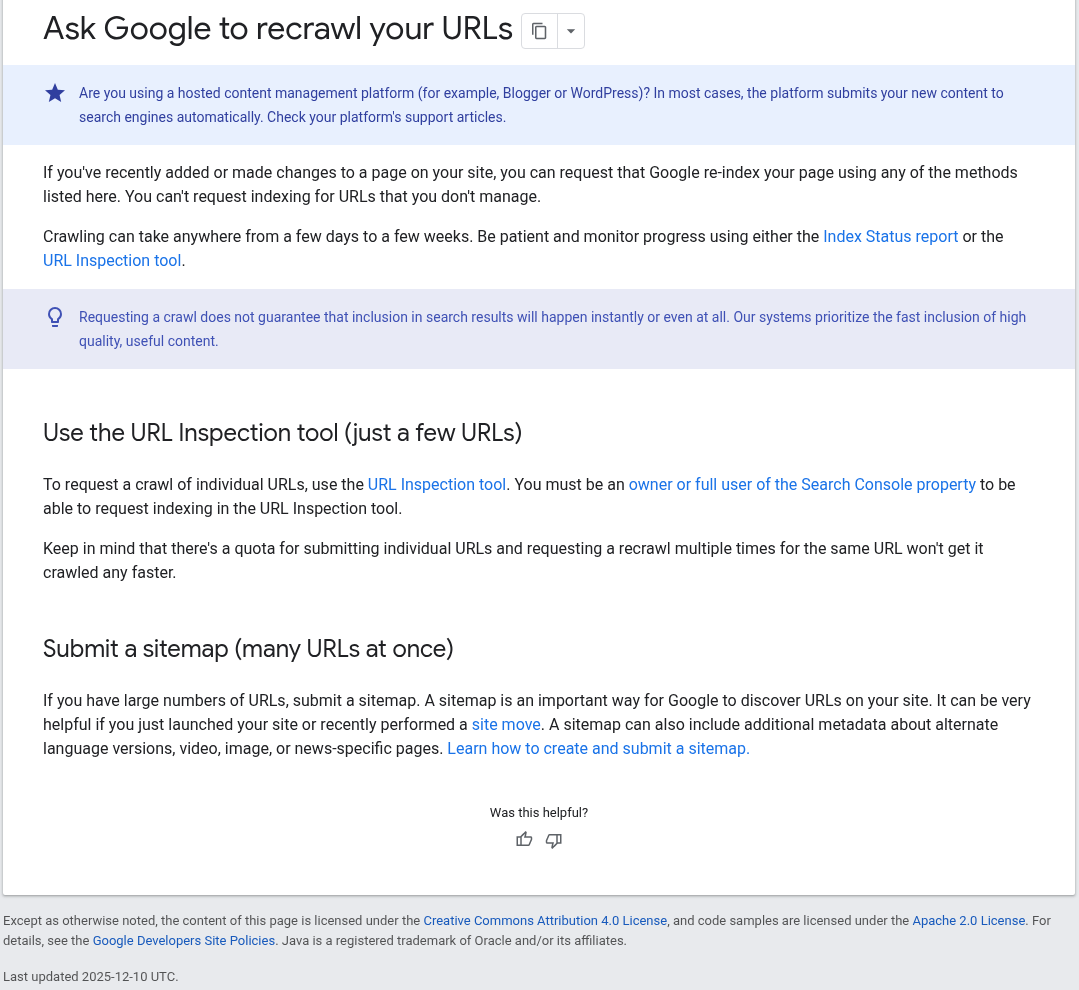
Google's recrawl guide: crawling takes days to weeks, captured Nov 1, 2026.
So how long does SEO take? For a SaaS company, plan on a few weeks to get indexed, three to six months before individual pages reach page one for long-tail queries, and closer to a year before the channel carries real pipeline. Below: each milestone, a worked nine-month timeline, and what to measure to tell slow from broken.
The four clocks inside "how long does SEO take"
People asking this question usually mean one of four different things, and each runs on its own schedule.
Discovery and indexing. Google has to find the URL, crawl it and add it to the index. On a site Google already visits often, this takes days. On a new site with few links, it can take weeks.
First rankings. A page starts appearing for some queries, usually low-volume ones, somewhere in the results. This first impression proves only that the page is indexed and eligible.
Page one. A page reaches the first ten results for at least some of its queries. One long-tail query can put a page there while its main target still sits on page four, so check which queries got it there.
Business results. Clicks, then signups, demos and pipeline. Clicks lag page one because a page often ranks first for queries almost nobody types.
Treat these as separate clocks. A quarterly review that only asks "is organic traffic up?" mixes all four and can't tell you which one is stuck.
What a typical first year looks like
Sites move at different speeds. A healthy program still tends to pass through the same phases in the same order.
Phase | What a healthy program shows | What it doesn't show yet |
|---|---|---|
Weeks 1 to 4 | New URLs crawled and indexed; first impressions on niche queries | Page-one positions, clicks |
Months 2 to 3 | Impressions growing across more queries; positions improving week to week | Meaningful clicks |
Months 4 to 6 | First page-one positions on long-tail and comparison queries; first organic signups | Traffic on head terms |
Months 7 to 12 | A small group of pages bringing most of the visits; organic leads in the pipeline report | A finished channel |
Two patterns matter for planning. Page-one positions mostly arrive after the second month, so a content program judged at week six looks like a failure even when it's on track. And clicks are lopsided: a small share of articles usually brings most of the visits, which is why the six-month review should pick the winners and stop averaging everything.
A site with a penalty, a migration or a weak technical base will run slower than this table.
Why one SaaS site ranks in weeks and another takes a year
The biggest variable is usually the site itself. The same article can be seen in two days on one site and wait a month on another.
Google's crawl budget guide explains part of that gap: "URLs that are more popular on the Internet tend to be crawled more often to keep them fresher in our systems." A product with years of links, brand searches and a busy blog gets new URLs crawled quickly. A seed-stage site with a dozen pages waits.
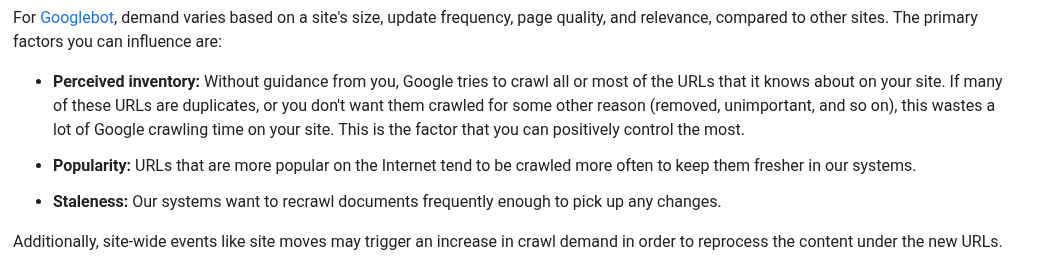
Google crawl budget guide: popularity raises crawl demand, captured Nov 1, 2026.
Several things a SaaS team controls shift the timeline:
Query difficulty. Long-tail problem queries ("how to reconcile Stripe payouts in NetSuite") move in weeks. Head terms like "project management software" are owned by sites with years of authority, and a new site may not reach page one for them within the first year at all.
Page type. Integration, comparison and alternatives pages target small, specific queries with buying intent. They often rank sooner than broad guides and convert at higher rates, which is why they belong early in the plan.
Rendering. Marketing sites built as client-side React apps can delay indexing if the server sends an empty shell. Google can render JavaScript, but it adds a step.
Internal links. A new article linked from the blog index and from pages Google already crawls often gets found sooner than one sitting only in the sitemap.
Length. Word count isn't a speed lever. Match the depth the query needs; padding a post doesn't buy time.
Bing also deserves a line in the plan. B2B buyers on Windows machines and Edge search there, and Bing Webmaster Tools shows clicks that Search Console never will.
A worked example: nine months at six articles a month
Take a hypothetical Series A SaaS company with a DR around 20 on a third-party link authority score, a clean technical setup and a blog that publishes six new articles a month, starting in January, mostly mid-funnel problem queries plus a few comparison pages.
End of month | Articles live | What on-track looks like | Decision at this point |
|---|---|---|---|
3 (March) | 18 | Nearly all indexed; impressions rising on long-tail queries; few or no clicks | Keep publishing; fix any URL that isn't indexed |
6 (June) | 36 | The January and February articles reaching page one for long-tail queries; first clicks and the odd signup | Refresh and interlink the pages that moved |
9 (September) | 54 | A handful of articles bringing most visits; comparison pages sending demo requests | Write the next batch around the queries the winners rank for |
The month 3 row is where many SaaS teams lose patience. Eighteen articles are live and the traffic chart is flat, which is normal for pages that young. By month 9 the chart looks different, but the gains come from a handful of pages, not from all 54.
Two adjustments would move every row. A DR of 20 with little crawl history puts this site toward the slow end, so shift the table right by a month or more. A team that publishes twelve articles a month doubles the count of pages in play but not the speed, since each article still runs on its own clock.
What to measure at day 30, day 90 and day 180
Each checkpoint has one question to answer. Use the Page indexing and Performance reports in Search Console, filtered to the URLs you published.
Day 30: is it indexed? On a site Google crawls regularly, most new articles should have impressions by now. Anything still missing at day 60 is an indexing problem first. Check it in the URL Inspection tool before anyone rewrites it.
Day 90: is it climbing? Look at impressions by query, not traffic. A page gaining impressions on more queries each week is working even with zero clicks. Pages with impressions but no movement in average position usually need a better match to intent or more internal links.
Day 180: is it paying? Now count clicks, signups and demo requests from organic landings, and expect the long tail of zero-click articles. This is the checkpoint for doubling down on the few pages that took off: refresh them, link to them from product pages, and write the next articles around the queries they already rank for.
Pipeline attribution takes longer than this, and B2B sales cycles add months on top. The B2B SEO attribution guide covers how to connect organic visits to revenue without overcounting.
What to watch out for
Timelines get abused in both directions, by teams that give up too early and by vendors who promise too much.
Guaranteed rankings by a date. No one controls Google's crawl schedule or competitors' pages. Google's own guide to hiring an SEO suggests asking a prospective SEO what results to expect, and in what timeframe, which invites a range with stated assumptions. A single date with no assumptions is a sales line.

Google hiring guide: ask about results and timeframe, captured Nov 1, 2026.
Judging content at week two. Page-one positions rarely arrive that early. Cutting a program before day 90 throws away the work that was about to pay.
Counting impressions as wins. An impression counts each time your page appears in someone's search results, whether or not they click. Impressions confirm indexing. They are not demand.
Ignoring the second engine. If Bing Webmaster Tools isn't set up, some early clicks are invisible.
Publishing faster to fix slowness. Volume adds more lottery tickets. It doesn't make any single page rank sooner, and thin pages at scale invite trouble with Google's spam policies.
When SEO is the wrong channel for your deadline
If a launch, a funding milestone or a quarter-end target needs demand in the next 60 days, SEO alone won't deliver it. New pages rarely earn meaningful clicks inside two months, and the crawl step alone can use up several weeks of that. Teams in that position usually run paid search for the near-term queries and build organic pages alongside it. The trade-offs between the two channels, and how to split budget by stage, are covered in SEO vs PPC for SaaS.
For everyone else, the right frame is a twelve-month plan with checkpoints. The B2B SaaS SEO guide lays out what to build first, and if you'd like a partner to run the program, Miraa works as a B2B SaaS SEO agency.
FAQ
How long does SEO take for a brand-new SaaS website?
Expect indexing within days to weeks, first page-one positions for long-tail queries in three to six months, and meaningful pipeline in nine to twelve months. A new site has little crawl history, so it will usually sit at the slower end of every range in this post.
Can a page rank in the first week?
It can appear that fast, especially on a site Google crawls every day. Reaching page one that fast is rare outside very niche queries. Fast appearance is common. Fast ranking is not.
How long do technical SEO fixes take to show results?
Google has to recrawl the affected pages first, which takes days to weeks depending on how often it visits your site. Site-wide changes take longer. Google's site move guidance expects a small to medium site to need a few weeks for most pages to move, with ranking fluctuations along the way.

Site move guide: medium sites may need weeks, captured Nov 1, 2026.
Does requesting indexing speed things up?
It can get a URL crawled sooner. It doesn't change how the page ranks once indexed, and a crawl request doesn't guarantee inclusion in results.
Should we stop publishing if nothing ranks after three months?
Not on that evidence alone. Many pages that end up on page one aren't there at day 90. Stop and investigate if pages aren't indexed by day 60 or impressions aren't growing. Otherwise, keep going and judge the program at six months.
Planning a realistic SEO timeline
Write the timeline down before the first article ships: indexing by day 30, rising impressions by day 90, clicks and signups from the best pages by day 180, and a pipeline review at month twelve. Agree on it with whoever signs off the budget. The program that survives month three is usually the one that set those expectations in January.