
Last updated: November 1, 2026
When ChatGPT searched the web in a 2026 test, it almost never searched for what the user actually typed. Researchers at universities in Singapore and China recorded what ChatGPT did behind the scenes between March 29 and July 29, 2026, running 80 questions 20 times each on two of its newer model settings. The user's exact wording showed up among the search queries in 0.0% of runs for both. The researchers left out question types that the model can answer from memory, so the study measures how ChatGPT rewrites a question once it searches. It doesn't measure how often ChatGPT searches in the first place.
The more useful question has three parts: when does the assistant search, what does it search for, and which of the pages it finds does it cite?
Every major AI assistant now answers in two ways. It can answer from what the model learned in training, or it can search the web and answer from what it finds. Which path it takes depends on the engine, the setting and the question. For a B2B brand, both paths matter, but they move on very different timescales, and you can only influence the fast one quickly.
For how answer engines choose their sources more broadly, see the AEO pillar guide.
The two paths: training data and live retrieval
Training data is what the model learned before it was released. It's a snapshot of text, mostly from the public web, frozen at a knowledge cutoff. When an assistant answers from training data, it isn't looking anything up. It's producing the answer it learned was likely, which is why it can be confidently out of date.
Live retrieval is a search at the moment you ask. The assistant sends one or more queries to a search system, reads some of the pages that come back and writes an answer from them, usually with citations. Google's developer documentation for grounding with Google Search puts the purpose simply: it lets the model "cite verifiable sources beyond its knowledge cutoff."
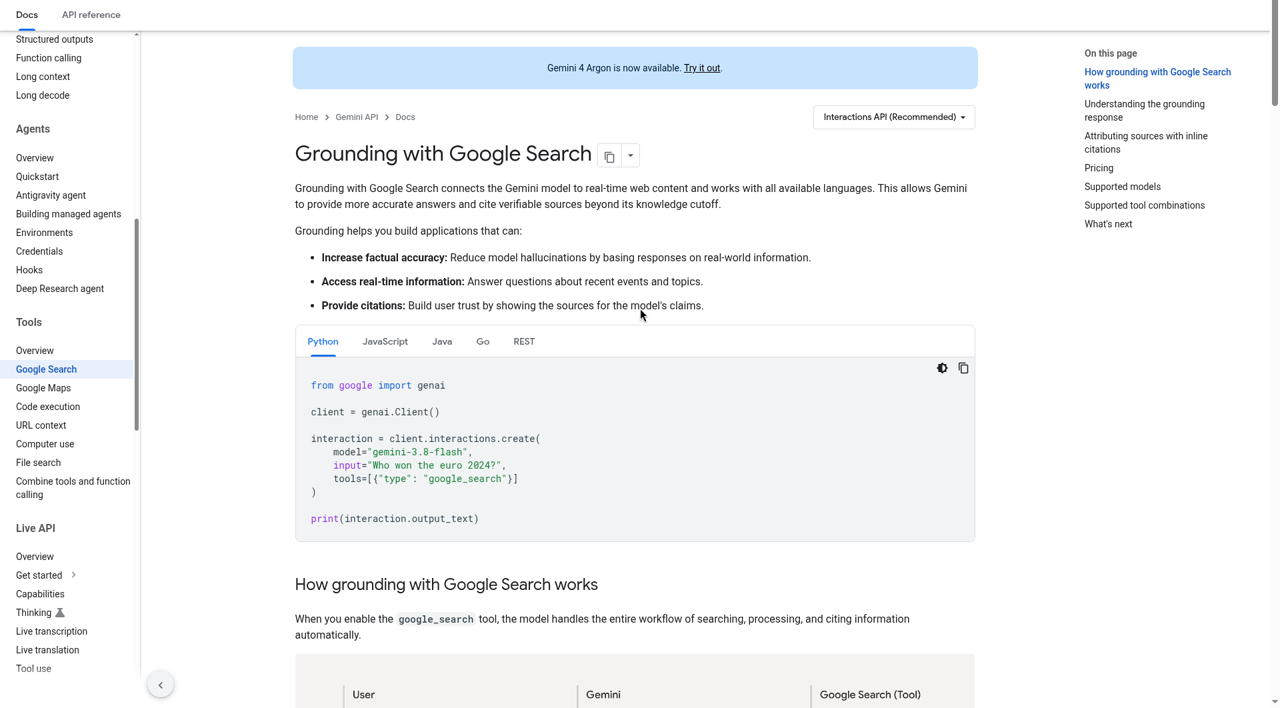
Gemini API docs on grounding answers with Google Search.
Most answers blend both. The model's training shapes how it phrases the question, which sources it trusts and how it reads what it finds. Retrieval supplies the facts.
Here's a quick way to tell which path an answer took. If there are citations or a visible "searching" step, the assistant retrieved. If there are none, it probably answered from training, though some products search without showing it.
When each engine searches
The rules differ by engine and by product. Here's what each company's own documentation says.
ChatGPT. OpenAI's developer documentation for web search describes two setups. With the search models in its Chat Completions API, "the model always retrieves information from the web before responding." With its Responses API and the web search tool, the model can "decide whether to search." Reasoning models can also search "as part of its chain of thought" and "decide whether to keep searching." That's the API. The ChatGPT app has its own search settings, which OpenAI documents separately in its help center.
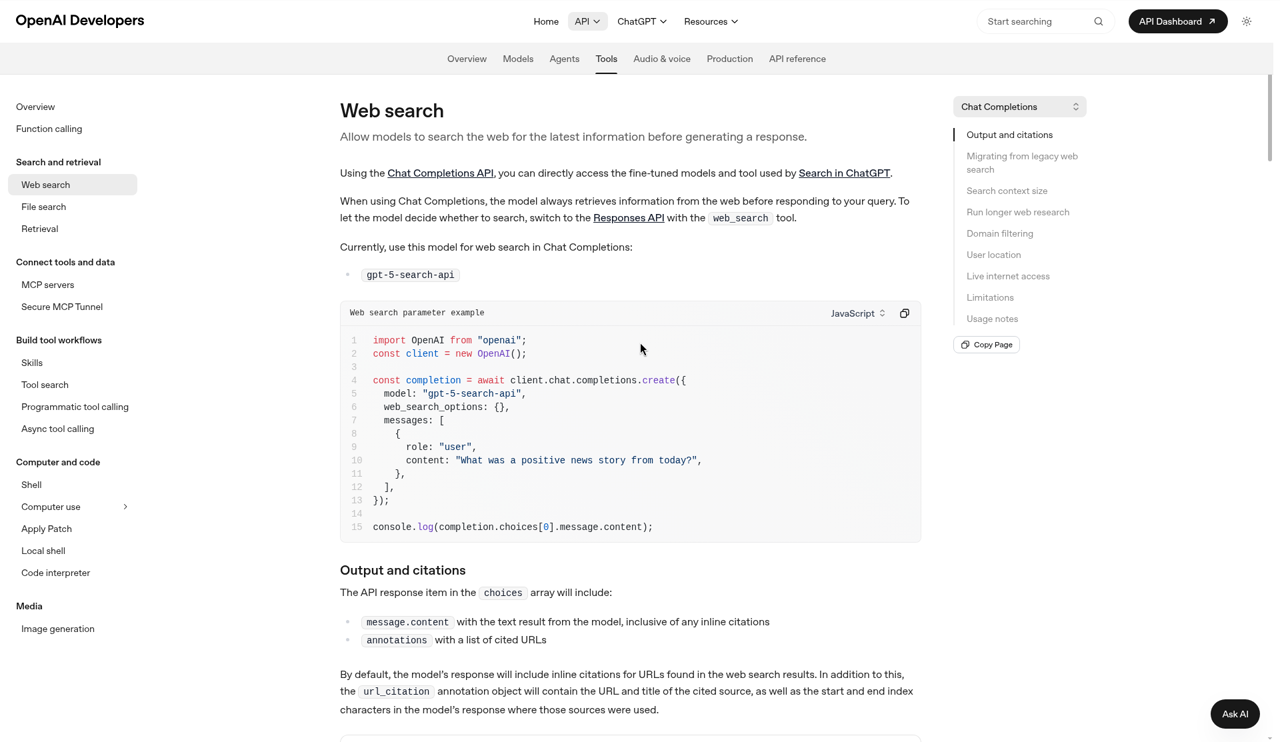
OpenAI API docs on when the model searches the web.
Claude. Anthropic's help page on web search says that in the new Claude experience "Claude searches the web when it helps," with no toggle. In other setups, users can turn web search on or off. The page also says that typing "Search the web" or "Use web search" in your prompt makes sure Claude uses it, and that every searched response includes citations.
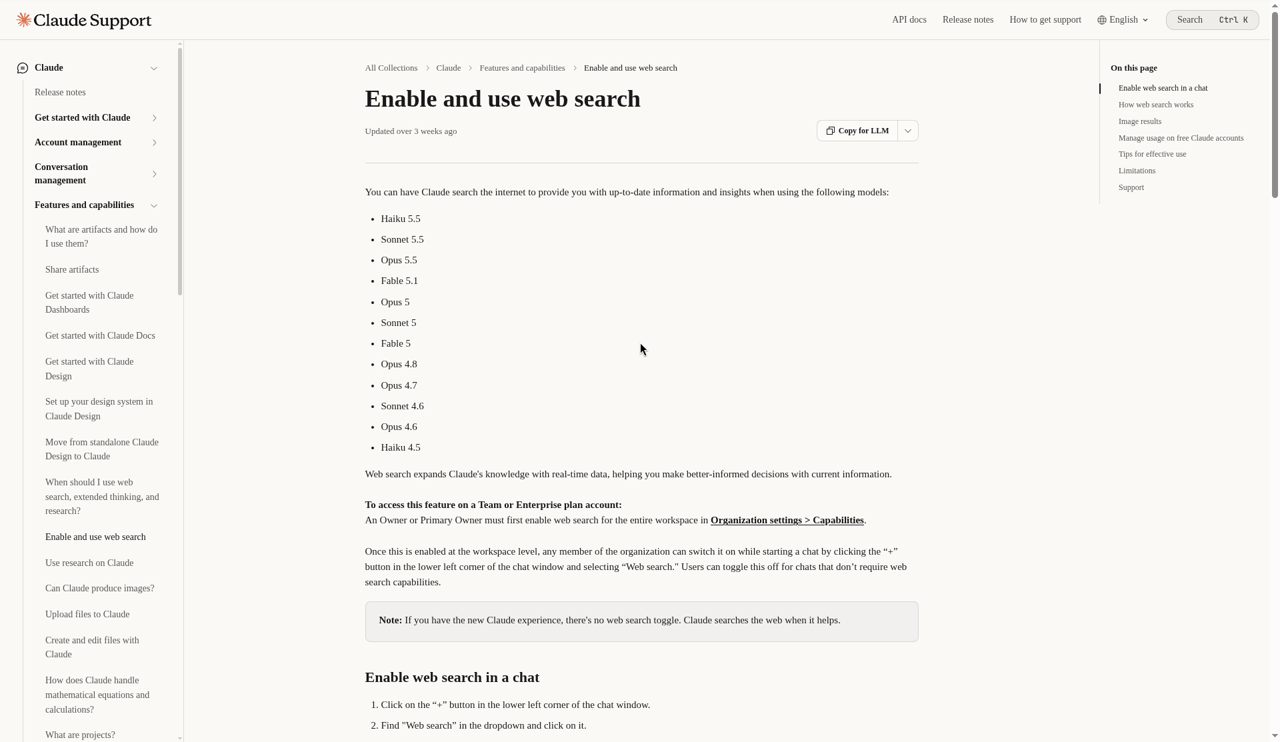
Claude help center: Claude searches the web when it helps.
Gemini. Google's grounding documentation describes the steps: the model "analyzes the prompt and determines if a Google Search can improve the answer," and if needed "automatically generates one or multiple search queries and executes them." For Gemini 3 and newer models, developers pay per search the model runs, with a monthly free allowance before per-query billing starts, and one prompt can trigger several billable searches.
Perplexity. Perplexity is built around search. Its developer documentation describes its products as "real-time, web-wide research and Q&A."
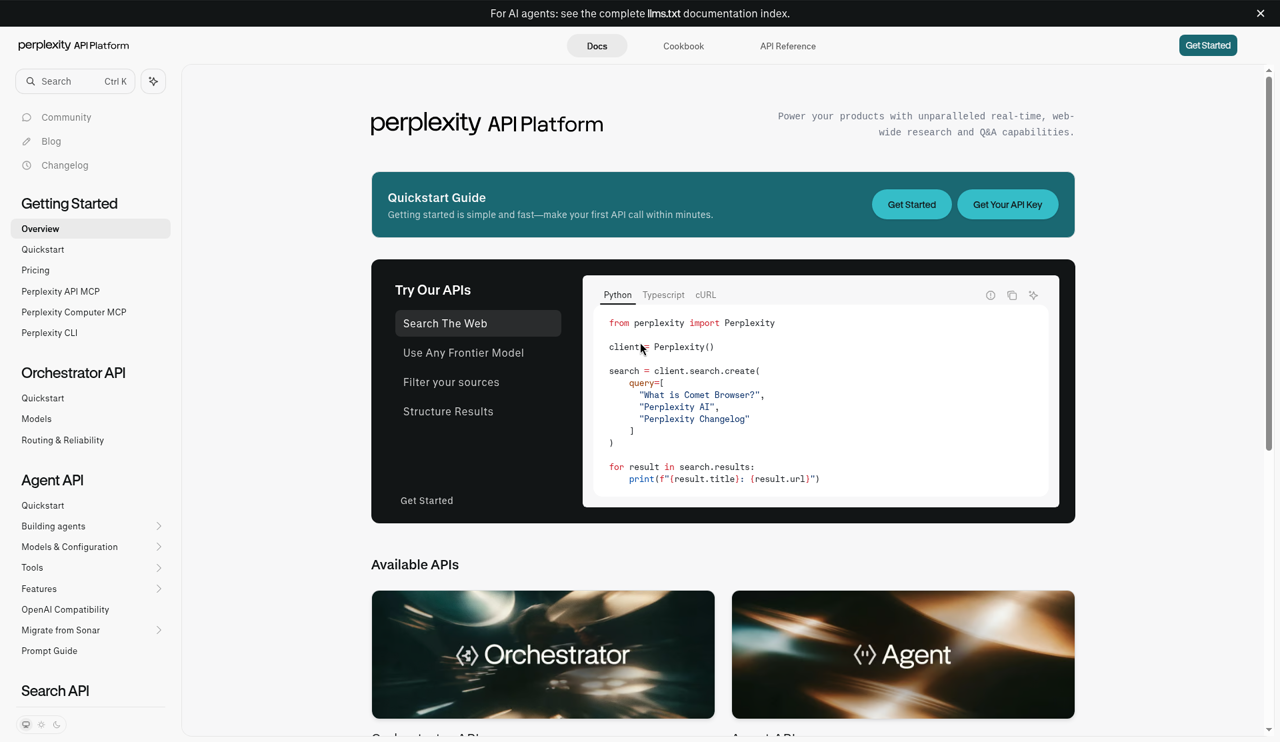
Perplexity developer docs overview of its search-based products.
Google AI Overviews and AI Mode. These are search products, so they always draw on Google's index. Google's documentation says either one can use what it calls query fan-out, running several related searches on parts of the question before it writes the response.
What happens when they do search
The 2026 study is useful because it measured ChatGPT's search behavior directly, from the network responses returned to the researchers' own signed-in ChatGPT sessions. The paper was posted to arXiv on October 11, 2026. The authors are at the National University of Singapore and Xi'an Jiaotong University; the first author also lists an AI lab at State Grid Corporation of China.
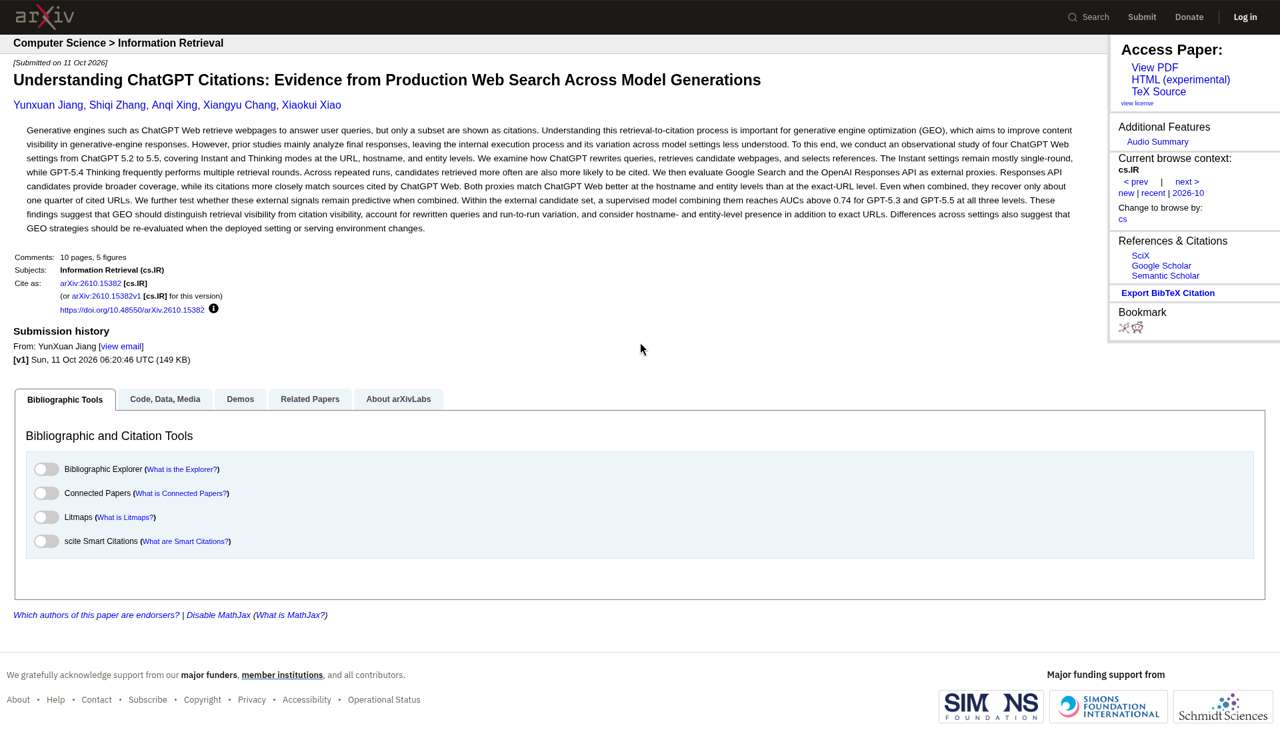
arXiv paper on ChatGPT citations from production web search.
A few findings stand out.
Queries are rewritten. The 0.0% exact-match figure covers GPT-5.3 Instant and GPT-5.5 Instant, the two settings run on all 80 questions, and GPT-5.4 Thinking on a smaller set. The older GPT-5.2 Instant matched the user's wording in 5.5% of runs. The model turns your question into its own search terms.
Some settings search much more than others. The reasoning setting, GPT-5.4 Thinking, averaged 11.82 queries per run and used more than one round of searching in 71.3% of runs. GPT-5.3 Instant and GPT-5.5 Instant used more than one round in 5.5% and 3.8% of runs. In later rounds, the reasoning setting leaned heavily on site-restricted searches, which rose from 25.1% to 54.7% of its queries.
Retrieved isn't the same as cited. The study separates the pages ChatGPT found from the pages it showed as citations. Only a subset of retrieved pages make it into the answer.
Results vary from run to run. For GPT-5.3 Instant and GPT-5.5 Instant, 40.8% and 44.5% of candidate URLs appeared in only one of the 20 runs, while 9.4% and 7.7% belonged to a stable core that kept coming back.
Two cautions. The 80 questions came from a public dataset of real conversations with search-enabled assistants, collected in 2025, so the questions themselves are more than a year old even though the runs are from 2026. And as the opening noted, the sample is built to trigger search.
Why a Google ranking doesn't guarantee a citation
This is the finding I'd put in front of any B2B team that treats a page-one Google ranking as a safe bet for AI answers.
The researchers tried to rebuild ChatGPT's candidate list using Google Search results plus OpenAI's own API. Together, those recovered only 28.3% and 26.2% of the exact URLs cited by GPT-5.3 Instant and GPT-5.5 Instant, compared with 50.3% and 48.7% of the cited hostnames. In other words, outside search results got the right websites about half the time, but the right pages only about a quarter of the time.
Three reasons this happens:
The assistant searches with its own rewritten queries, not yours. You may rank for the phrase a buyer types and not for the phrase the model sends.
The assistant's search provider and index may differ from Google's. Each engine uses its own setup.
Being retrieved isn't enough. The model picks which retrieved pages to cite, and the paper reports that cited candidates tended to have longer retrieval snippets.
The practical takeaway is that domain-level presence travels better than page-level rankings. If your site is a trusted source on the topic, you have a better chance of being cited on some page, even if not the one you'd pick.
The guide on how to get recommended by ChatGPT covers the ChatGPT-specific side of this in more depth.
What you can influence, and how fast
Split your effort by path.
Live retrieval: weeks to months. Retrieval reads the web as it is now. When you publish a clear page, get it indexed and earn mentions on sites the engines trust, retrieval can start using it. You can influence this through crawlable pages, clear answers near the top, accurate facts across your site and third-party coverage. Nothing here is instant, but it moves on the timescale of normal SEO work.
Training data: months to years. What a model learned about you was fixed at its cutoff. A new model version may learn something different, but you don't control when that happens or what gets included. The best you can do is make sure the public web says accurate, consistent things about your company, so the next training run picks them up.
A useful split for planning:
Fast levers: fixing wrong facts on your own pages, publishing direct answers to buyer questions, getting into the sources assistants already cite.
Slow levers: building a consistent public record of what your company does, who uses it and how it compares.
If an assistant repeats something wrong about your company, the fix depends on which path it came from. The guide on what to do when ChatGPT says the wrong thing about your company walks through both cases.
Some teams publish an llms.txt file for AI systems. Whether that helps is a separate question, covered in the guide to llms.txt.
How to test prompts properly
If you're checking what assistants say about your brand, test in a way that reflects how buyers actually see them.
Signed in vs signed out. Memory, personalization and account settings can change the answer. Run your core prompts signed out, or in a clean account with memory off, and compare with a normal signed-in session.
Repeat runs. One run tells you very little. The ChatGPT study shows how much retrieved sources shift between runs, and a University of St. Gallen paper first posted April 8, 2026 makes the same point across ChatGPT, Gemini, Google AI Mode and Perplexity, from daily runs in four Swiss consumer categories between January 24 and March 20, 2026. Its title sums up the advice: don't measure once. Run each prompt several times and record how often you appear.
Note whether it searched. For each run, record whether the answer had citations. A brand mention without citations probably came from training; one with citations came from retrieval.
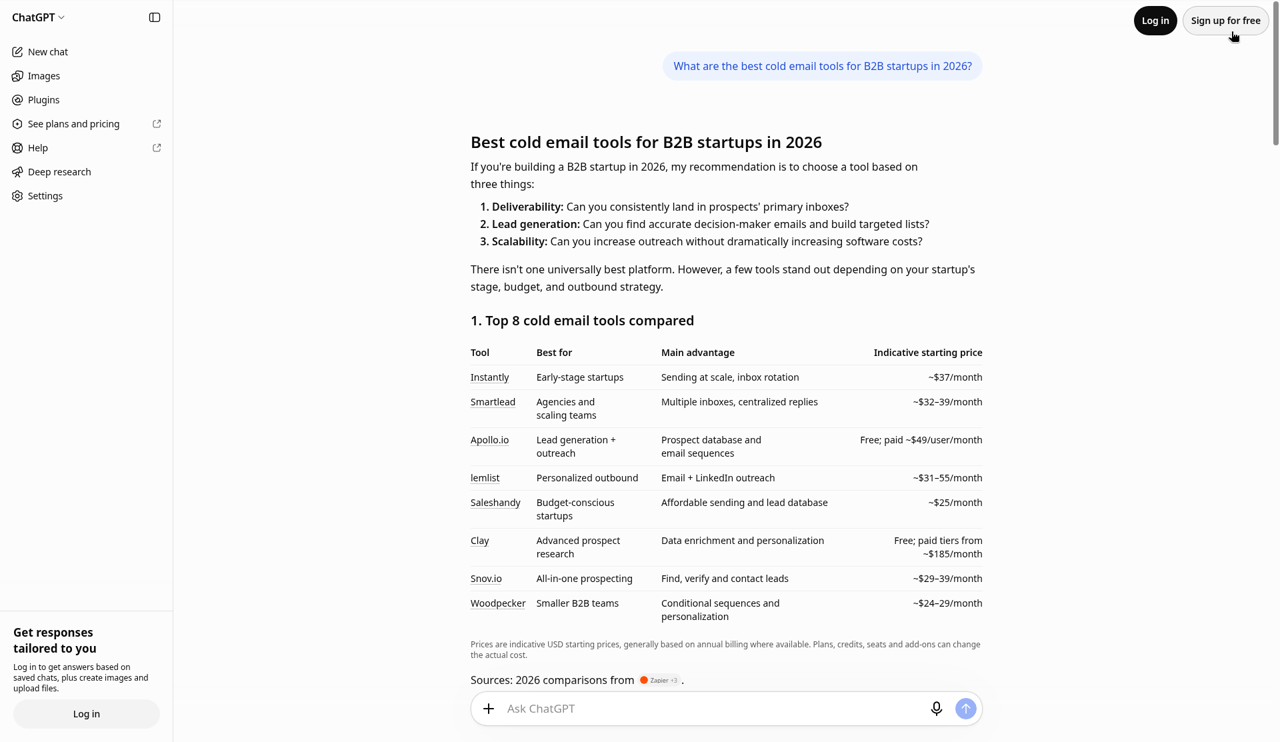
A signed-out ChatGPT answer with source citations shown.
Force each path. In assistants that allow it, ask once with search turned off and once with "Search the web" in the prompt. The gap between the two answers shows what the model knows and what it has to look up.
Write it down. Keep the prompt, date, engine, model setting, signed-in state and full answer. Without that, you can't tell a real change from noise.
If you script these tests through an API instead of the apps, price the searches first. The Gemini grounding docs put the free allowance at 5,000 searches a month, shared across Gemini 3 and newer models, then $14 per 1,000. Say you track 50 prompts, five runs each, every week: about 1,000 prompts a month. If each prompt triggers three searches (an assumption; the docs only say one prompt can trigger several), that's 3,000 searches, inside the free tier. Run the same panel for five brands and you're at 15,000 searches, 10,000 of them billable, or $140 a month. The docs also set a default of 1,500 search requests a day per project on the paid tier, which that volume stays under. API runs aren't the consumer app, so treat them as a proxy for what buyers see.
For a fuller measurement process, see how to measure AI search visibility.
Which situation are you in?
Your brand is new or recently renamed. Training data probably knows little about you. Focus on retrieval: clear pages, consistent facts and mentions on sites assistants already cite.
Your brand is established but the answers are outdated. That's usually training data showing through. Make sure current facts are easy to retrieve, and test with search forced on to see if retrieval corrects it.
You rank well on Google but rarely get cited. Expect the gap the study describes. Look at domain-level presence and at whether your pages answer the rewritten, more specific queries an assistant is likely to send.
You're choosing which engines to test. Start with the ones your buyers use. If you sell to developers, test the assistants they work in; if you sell to finance teams, ask a few customers.
What to watch out for
Assuming every answer searched. Many answers come from training alone. Check for citations before you conclude anything about your pages.
Reading one engine's behavior as all engines'. The study covers ChatGPT only. Claude, Gemini and Perplexity search differently.
Chasing exact-match keywords for AI. The assistant rewrites your buyer's question. Cover the topic thoroughly rather than one phrasing.
Old question sets. Build your prompt set from what buyers ask now, not from a dataset like the study's.
Expecting training data to update quickly. It won't. Plan for retrieval first.
Final thoughts
Put most of your effort into being the clearest, most consistent source for the questions your buyers ask, and test the results properly. The LLM SEO service page describes how Miraa approaches this work.