
Last updated: November 23, 2026
Google uses links to help rank pages. The PageRank item in its SEO Starter Guide, last updated December 10, 2025, is short. "We have many ranking signals, and PageRank is just one of those."
A lower link count, then, does not settle why competitors outrank me with fewer backlinks. The cause is often on the page, or in where the links point. This guide covers eight reasons, grouped into four things to compare between your page and the one above it.
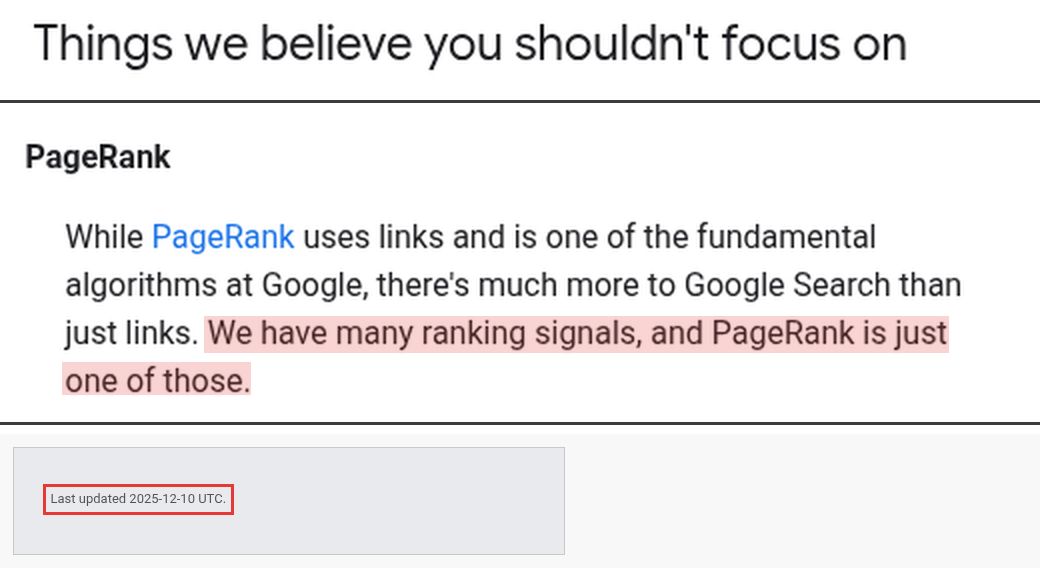
Three parts of the same page, captured Nov 21, 2026.
What a backlink count leaves out
The number in your SEO tool is an estimate. Each tool counts the links its own crawler found, so two tools give two different totals for the same site. Google does not use either number.
DataForSEO, a search data company, measured how small the gap at the top can be in its October 2026 Search Insider report. URLs in first place had a median of 95 referring domains, against 84 for URLs in positions 4 to 10.
On Google's page on how Search works, last updated December 18, 2025, relevance comes from hundreds of factors, including the searcher's location, language and device. A site-wide link total cannot capture any of that.
Tools that boil rankings down to averages have the same problem. A Google host made this point in a Search Off the Record episode from January 8, 2026. He recalled old tools that graded content against the average of what ranked, down to the length of the headline. His point was that the average was not real. Click through the results and each one is different.
Compare what each page answers
Start here. It is the quickest comparison to make, and it needs no tool.
The first reason is that their page fits the search better. Search the query and look at the kind of page that ranks. If the top results are comparison pages and yours is a feature page, more links will not turn it into a comparison. A page that matches the task in its first screen can beat a stronger page that does not.
Their page may also answer the follow-up questions, which is reason 2. Google's ranking systems guide, last updated December 10, 2025, describes a passage ranking system. It picks out sections of a page to judge how relevant the page is to a search. A page with a clear section for each related question gives that system more to work with.
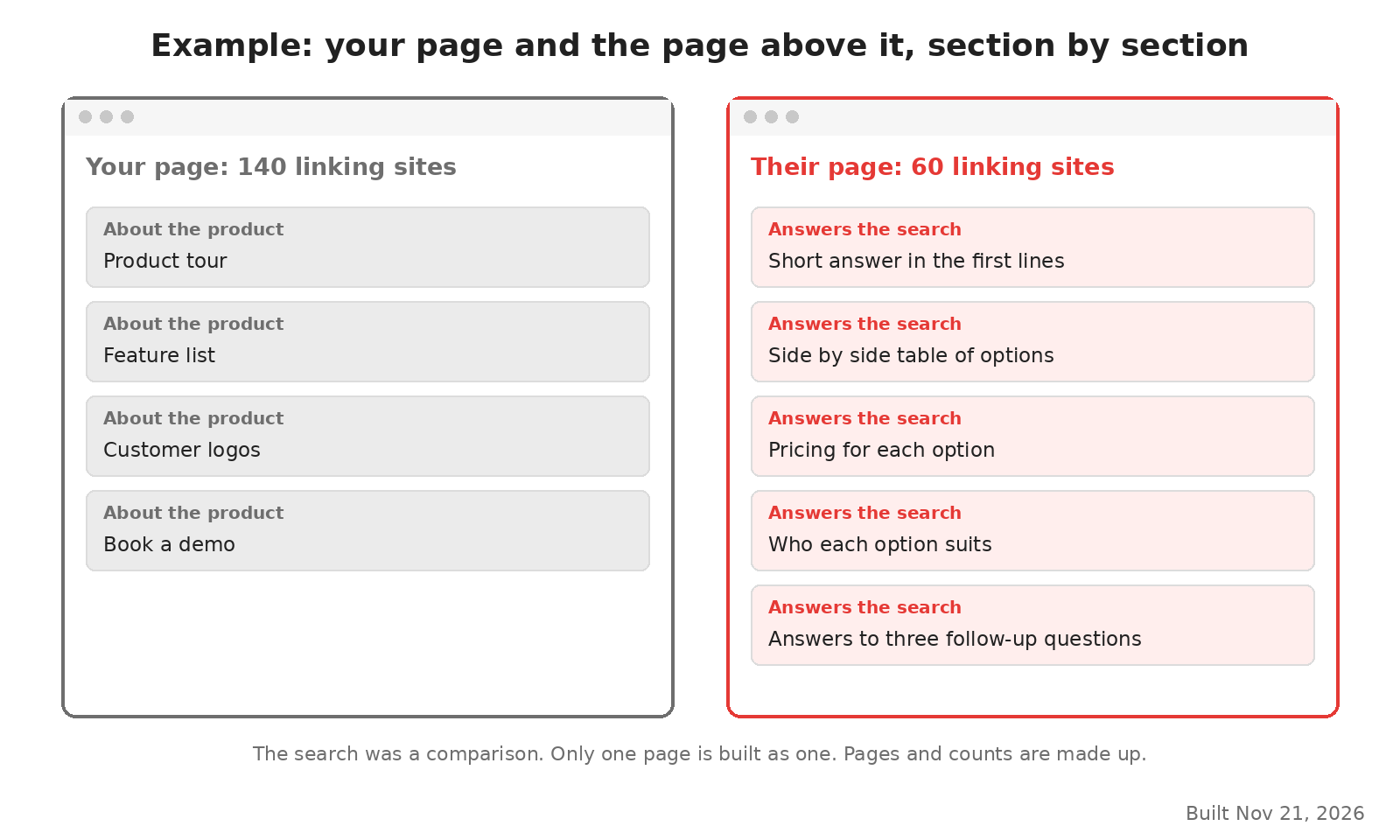
Example pages, made up for this guide. Built Nov 21, 2026.
Put the two pages side by side, as above. List each question the higher page answers, then mark which ones yours skips.
Compare where the links point
Reason 3 is that their links point at the page that ranks. Your site may have more links in total. Most of them may go to the home page, a free tool or one old post that went viral. The ranking page itself may have very few.
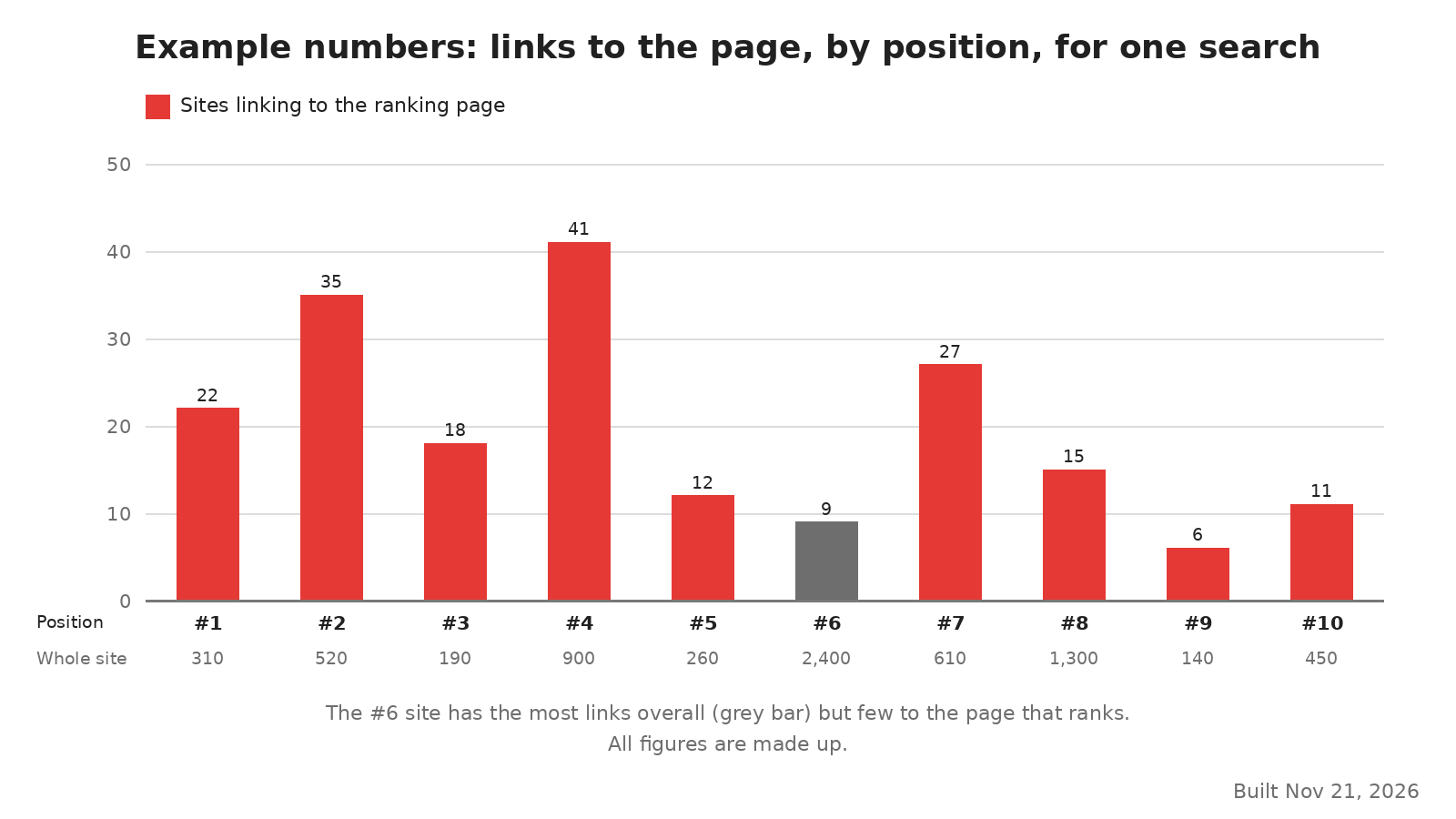
Example numbers, not real data. Built Nov 21, 2026.
So compare the links to each URL. Site totals mix in links to every other page. In the example above, the site with 2,400 links overall ranks sixth, and only 9 of those links point at the page that competes.
Next, their links may come from sites on the same topic. That is reason 4. I would take ten links from pages your buyers read over a hundred from pages that have nothing to do with your product. When you review their links, look at who links and why, as well as how many.
Compare which links count
Part of your link count may do nothing at all (reason 5). Google's spam policies, last updated August 28, 2026, list examples of link spam. Two of them are low quality directory or bookmark site links, and links spread widely in the footers or templates of many sites.
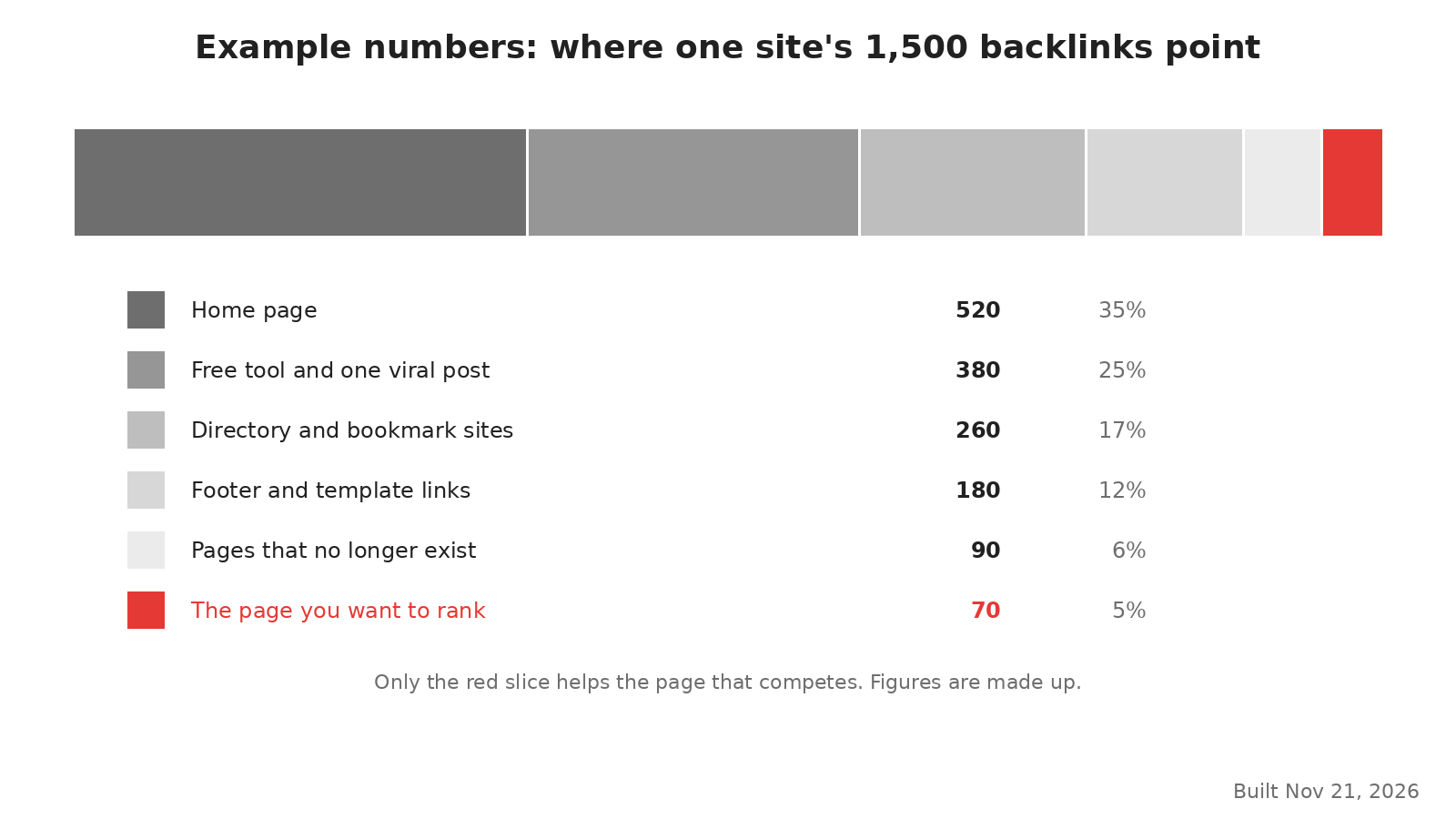
Example numbers, not real data. Built Nov 21, 2026.
If a large share of your count looks like that, your real total is smaller than the tool shows. Some of those links may come from old link building that nobody on the team remembers.
Reason 6 is that the tool counts links Google may never see. A crawler records links on pages that are blocked, deleted or never indexed. A competitor with fewer but cleaner links can have more that count.
Compare timing and your own site
Some searches want fresh results, and that is reason 7. The same ranking systems guide describes "query deserves freshness" systems. For a search about a movie that just came out, people want recent reviews. A competitor that updated its page last month can pass an older page with more links when the topic is moving.
The last reason is that your own site splits the topic. If you have three pages on the same subject, your links and internal links are spread across all three, and Google has to pick one. The competitor has one page that gets everything. The keyword cannibalization guide shows how to find and merge those pages. Check your internal links at the same time: the page you want to rank should get links from your most visited pages.
When links really are the gap
Sometimes the competitor's page is no better, the links point at the right URL and they are clean. Then the gap is links to that page, and you need more of them from sites your buyers read.
The SaaS SEO competitor analysis guide has the full method for comparing your site with a competitor's. If links are only part of the answer, the guide on brand mentions and backlinks covers how mentions without links fit in. When the gap is links to a few key pages, our link building team works on that kind of gap.